Homemade Balsamic Vinaigrette: Quick & Easy Salad Dressing
Whisk a 5-minute balsamic vinaigrette from olive oil, balsamic vinegar, Dijon, garlic and maple syrup. Includes fixes for separation and storage tips.
Prep
5 min
Cook
N/A
Total
5 min
Servings
16 servings (1 tablespoon each)
Ingredients
Tools that make this easier
Optional — the recipe works without them.
As an Amazon Associate, I earn from qualifying purchases.
Instructions
- 1
In a medium bowl or jar with tight-fitting lid, combine balsamic vinegar, Dijon mustard, minced garlic (or garlic powder), maple syrup (or honey), salt, and pepper.
- 2
Whisk vigorously or shake well for 15-20 seconds until ingredients are well combined and salt is dissolved.
- 3
While whisking constantly or pouring slowly into jar, gradually drizzle in the extra virgin olive oil.
- 4
Continue whisking or shaking until dressing is thick, creamy, and uniform.
- 5
Taste the dressing and adjust seasoning as needed – add more salt, sweetness, or pepper to balance flavors.
- 6
Serve immediately or store in refrigerator for later use.
Used in this recipe: Pint Mason Jar Stainless Steel Whisk (Amazon, affiliate links)
Notes
Tips for Success
- Bright, tangy, and perfectly balanced flavor
- Ready in just 5 minutes
- Uses simple, fresh ingredients
- Versatile for salads, roasted vegetables, and marinades
- Healthier than store-bought dressings
Common Mistakes to Avoid
- Can separate if oil is added too quickly
- May be too tangy if sweetener is reduced
- Fresh garlic flavor can become stronger over time
- Olive oil solidifies and appears cloudy when refrigerated
- Limited shelf life of 1-2 weeks
Nutrition (per serving)
80-95 kcal
Calories
Balsamic vinaigrette is a five-minute dressing made from olive oil, balsamic vinegar, Dijon, garlic and a little maple syrup or honey. There is no cooking, and it works on green salads, roasted vegetables and as a quick marinade. Mustard holds the oil and vinegar together, so the dressing turns thick and glossy instead of oily.
Ingredients
- 1/2 cup good quality extra virgin olive oil: This is the base, so use one you like the taste of. A fruity, slightly peppery oil works well.
- 1/4 cup balsamic vinegar: Choose one with a balance of sweetness and acidity. You don’t need an expensive aged bottle, but the cheapest ones can taste sharp.
- 1 tablespoon Dijon mustard: It adds flavor and also acts as the emulsifier that keeps the dressing together.
- 1 clove garlic, minced (or 1/2 teaspoon garlic powder): Fresh garlic is punchier; garlic powder is milder and quicker.
- 1 tablespoon maple syrup or honey: Just enough sweetness to balance the vinegar.
- 1/2 teaspoon salt and 1/4 teaspoon black pepper: Fine sea salt or kosher salt and freshly ground pepper.
How to Make Balsamic Vinaigrette
- Combine the non-oil ingredients: In a medium bowl or a jar with a tight-fitting lid, combine the balsamic vinegar, Dijon mustard, minced garlic (or garlic powder), maple syrup (or honey), salt and pepper.
- Whisk or shake: Whisk vigorously, or close the jar and shake well for 15-20 seconds, until everything is combined and the salt has dissolved.
- Add the olive oil slowly: While whisking constantly (or pouring slowly into the jar), gradually drizzle in the extra virgin olive oil. The slow stream is what makes a stable emulsion.
- Finish mixing: Keep whisking or shaking until the dressing is thick, creamy and uniform.
- Taste and adjust: Add more salt, sweetness or pepper to balance the flavors.
- Serve or store: Use it right away, or refrigerate it for later.
Why This Ratio Keeps Balsamic Dressing From Tasting Flat
This recipe uses two parts oil to one part vinegar, which is a little less oil than the classic 3:1 vinaigrette. Balsamic is sweeter and less acidic than wine vinegars, so a lower oil ratio keeps the dressing lively. The Dijon bridges the water-based vinegar and the oil. If your balsamic is very good and aged, you may need less sweetener than the recipe calls for.
Ways to Use Balsamic Vinaigrette
- Caprese: Drizzle it over mozzarella, tomatoes and basil, or try it on our easy Caprese salad.
- Beet salads: The sweetness of beets and the tang of goat cheese suit this dressing; it is a natural fit for the goat cheese beet salad.
- Fruit and cheese salads: A light drizzle goes well on the watermelon feta salad.
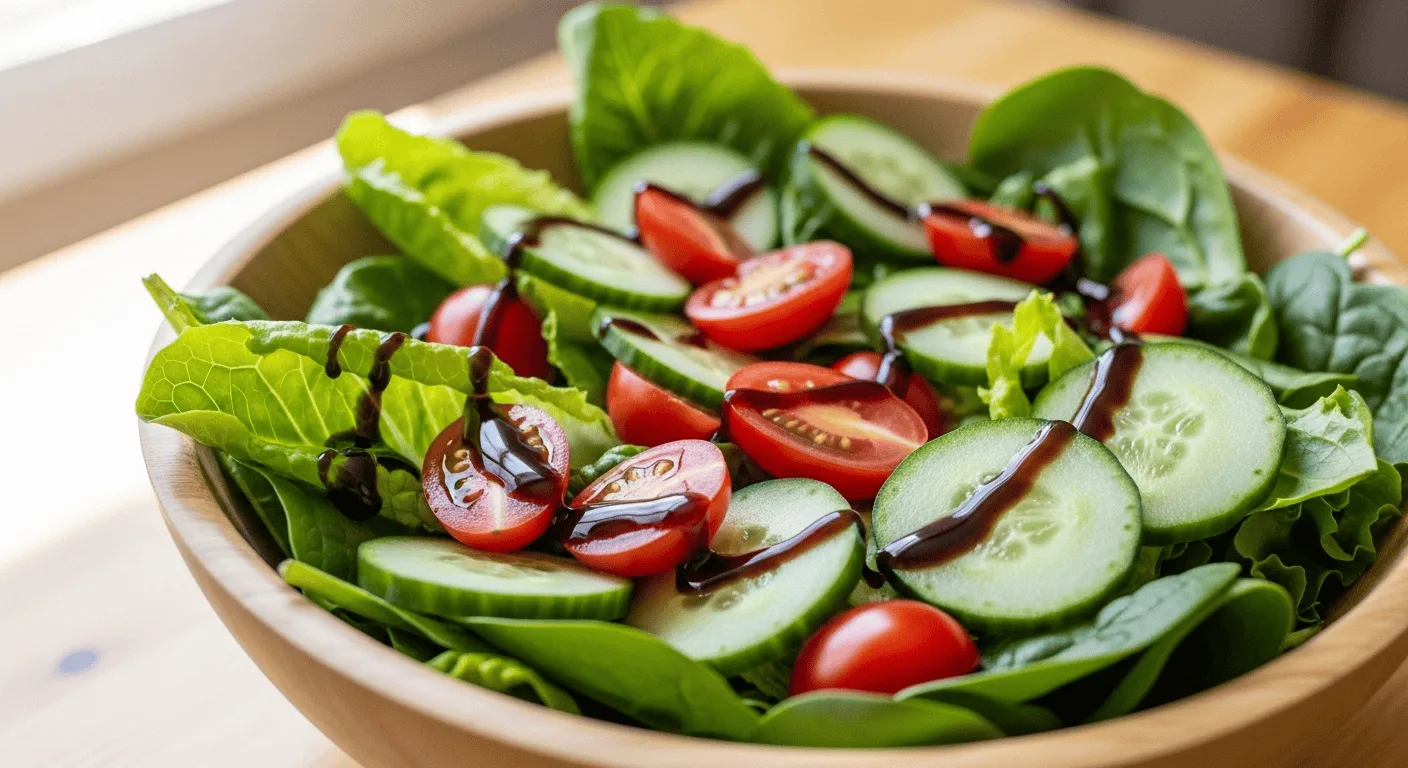
- Green salads: Toss with mixed greens, cherry tomatoes, cucumbers and crumbled feta or goat cheese.
- Roasted vegetables: Toss broccoli, asparagus, Brussels sprouts or bell peppers with it right after they come out of the oven.
- Marinade: Use it on chicken, fish or tofu before grilling or baking.
- Grain bowls and sandwiches: A spoonful brightens quinoa or farro bowls, deli sandwiches and wraps.
Adjusting the Flavor: Lighter, Less Sweet or More Herby
- Less sugar: Reduce or omit the maple syrup or honey. Expect a tangier dressing.
- Lower sodium: Use a low-sodium Dijon and cut back the added salt, tasting as you go.
- Herbs: Finely chopped basil, oregano or thyme add flavor without much extra calorie.
- Thicker texture: A pinch of chia seeds or ground flax will thicken it slightly.
- Brighter: A squeeze of lemon juice sharpens the dressing, and you can use slightly less vinegar if you prefer.
- Extra flavors: Finely chopped shallot, dried Italian herbs, red pepper flakes or a little orange juice all work; whisk in grated Parmesan just before serving.
Fixing Separated, Sharp or Flat Vinaigrette
- Separated or oily: The oil went in too fast or the mixing was too gentle. Add another teaspoon of Dijon and whisk or shake very hard for a minute or two. A small splash of warm water can also help it come back together.
- Too tangy: Add a little more maple syrup or honey, a small amount at a time, until it feels balanced.
- Too sweet: Add a touch more balsamic vinegar or a small squeeze of lemon juice.
- Bland: It usually needs more salt, pepper or garlic. Adjust to taste.
- Too thick: Whisk in a teaspoon or two of warm water or a little more balsamic vinegar.
- Tastes harsh: Cheap, very sharp balsamic or low-quality oil is the usual cause, since there are so few ingredients to hide behind.
- Dressing a salad: Start with a small amount and add more; it is easier to add than to take away.
Storing Balsamic Vinaigrette
- Container: Use an airtight jar or bottle with a tight-fitting lid.
- Refrigerate: It contains fresh garlic and no preservatives, so keep it in the refrigerator. It keeps for about 1-2 weeks.
- Cloudy when cold: Olive oil solidifies in the fridge, which is normal. Let the jar sit at room temperature for 15-30 minutes, then shake it to re-emulsify. Shake before each use, since some separation over time is natural.
- Don’t freeze: The oil and vinegar separate and the texture suffers.
- Garlic intensity: Fresh garlic flavor gets stronger as the dressing sits.
Balsamic Vinaigrette FAQ
Can I use a different vinegar?
Yes, red wine, white wine or apple cider vinegar all make good vinaigrettes, but the flavor changes considerably, so you will likely need to adjust the sweetener and seasoning.
Is this dressing dairy-free and gluten-free?
The ingredients are naturally dairy-free and gluten-free. If you have a serious gluten sensitivity, check your mustard label, since some processed mustards contain hidden gluten.
Can I use garlic powder instead of fresh garlic?
Yes. The recipe allows 1/2 teaspoon garlic powder in place of one minced clove. The flavor is milder and does not intensify as the dressing sits.
How many servings does this make?
The recipe yields 16 servings of 1 tablespoon each, at roughly 80-95 calories per serving, most of it from the olive oil.