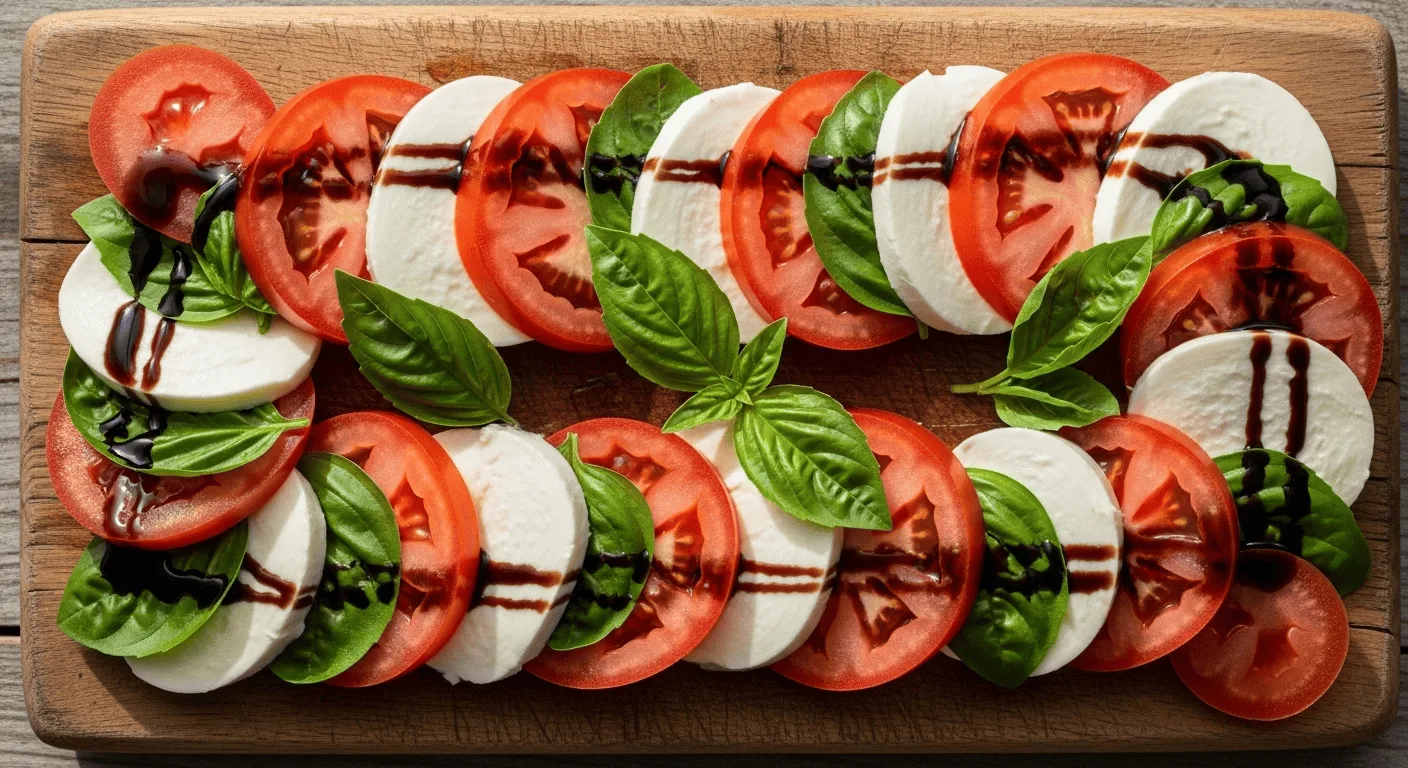
Easy Caprese Salad with Balsamic Glaze | Ready in 10 Minutes
Easy Caprese salad with fresh mozzarella, ripe tomatoes, basil and balsamic glaze. Ready in 10 minutes, plus tips to avoid a watery plate and bland tomatoes.
Prep
10 min
Cook
N/A
Total
10 min
Servings
4 servings
Ingredients
Tools that make this easier
Optional — the recipe works without them.
As an Amazon Associate, I earn from qualifying purchases.
Instructions
- 1
If using larger tomatoes, slice them into 1/4 to 1/2-inch thick rounds or wedges. If using cherry or grape tomatoes, simply halve them.
- 2
Gently drain fresh mozzarella balls. Halve or quarter bocconcini, or slice larger mozzarella to similar thickness as tomatoes.
- 3
Tear or roughly chop fresh basil leaves.
- 4
Arrange tomato slices or halves artfully on a serving platter or individual plates.
- 5
Distribute the mozzarella amongst the tomatoes on the platter.
- 6
Scatter torn basil leaves generously over the tomatoes and mozzarella.
- 7
Evenly drizzle extra virgin olive oil over the entire salad.
- 8
Lightly sprinkle with sea salt and freshly ground black pepper to taste.
- 9
Drizzle balsamic glaze generously over the salad.
- 10
Serve immediately.
Used in this recipe: 8-Inch Chef's Knife (Amazon, affiliate links)
Notes
Tips for Success
- Simple, elegant, and bursting with freshness
- Comes together in mere minutes
- Perfect appetizer, side dish, or light lunch
- Celebrates the best of seasonal ingredients
- Versatile and pairs well with many dishes
Common Mistakes to Avoid
- Can become watery if dressed too early
- Basil wilts quickly once dressed
- Tomatoes lose flavor when chilled excessively
- Low-quality ingredients can ruin the dish
- Too much balsamic glaze can overwhelm flavors
Nutrition (per serving)
280-320 kcal
Calories
Caprese is three ingredients and a dressing: ripe tomatoes, fresh mozzarella and basil, finished with olive oil, salt and a balsamic glaze. Nothing is cooked, so the result depends almost entirely on how good the tomatoes and cheese are and on when you season. This version serves 4 as a starter or side and takes 10 minutes from the cutting board to the table.
Below you will find notes on choosing ingredients, a short homemade glaze method, and the fixes for the usual problems: a watery plate, bland tomatoes and wilted basil.
Table of Contents
Ingredients
With so few components, each one matters. Here is what to look for.
- Fresh mozzarella (bocconcini or ciliegine): 8 oz (about 1.5 cups), drained and halved or quartered. Buy the kind packed in water or whey, not the low-moisture block or pre-shredded cheese. Small balls save you slicing.
- Ripe tomatoes: 1 lb (about 3-4 medium or 2 pints cherry/grape tomatoes). Heirloom tomatoes give more color and depth; cherry and grape tomatoes are sweeter and only need halving.
- Fresh basil leaves: 1/2 cup, packed. Choose bright green leaves with no black spots.
- Extra virgin olive oil: 2 tablespoons. A fruity oil is noticeable here because it is not cooked.
- Balsamic glaze: 2-3 tablespoons, or to taste. Store-bought works, or make it from the ingredients below.
- Sea salt and freshly ground black pepper: to taste.
Optional homemade balsamic glaze: 1 cup balsamic vinegar, plus 1 tablespoon maple syrup or honey if you want a sweeter glaze. Simmer the vinegar (and sweetener, if using) in a small saucepan over medium heat until it bubbles gently, then turn the heat to low and let it reduce for 10-15 minutes, stirring now and then, until it coats the back of a spoon. It thickens further as it cools. Keep extra in an airtight container in the fridge for up to 2 weeks. Making the glaze raises the total time to about 25 minutes.
If you would rather use a thinner dressing on other salads, the homemade balsamic vinaigrette uses the same vinegar in a different way.
Making the Salad Step by Step
The whole method is cutting and arranging. Prep takes 10 minutes and there is no cooking.
- Cut the tomatoes. Slice large tomatoes into rounds or wedges 1/4 to 1/2 inch thick. Halve cherry or grape tomatoes. Arrange them on a platter or individual plates.
- Drain and cut the mozzarella. Drain it well. Halve or quarter bocconcini; slice a larger ball to about the same thickness as the tomatoes. Distribute it among the tomatoes.
- Add the basil. Tear or roughly chop the leaves and scatter them over the top.
- Oil and season. Drizzle the olive oil over everything, then sprinkle lightly with sea salt and black pepper.
- Glaze and serve. Drizzle the balsamic glaze over the salad and serve immediately.
Keeping Caprese From Turning Watery
Most disappointing Caprese salads fail in one of four ways. Each has a simple cause.
- A puddle on the plate. Salt pulls water out of tomatoes, and wet mozzarella adds more. Drain and pat the cheese dry, and season only when you are about to serve. If the plate is already watery, spoon off the liquid before adding the glaze.
- Bland tomatoes. Out-of-season or fridge-cold tomatoes taste flat. Use ripe ones and let the tomatoes and cheese sit out for about 30 minutes before assembling. A pinch more salt also helps.
- Dark, limp basil. Fine mincing bruises the leaves and they blacken. Tear them, and add them last.
- Glaze that drowns the plate. Balsamic glaze is sweet and strong. Start with 2 tablespoons, taste, then add more. If your homemade glaze is too thin, simmer it a few more minutes; it thickens as it cools. Go easy on the salt too, because the cheese can already be briny.
If the salad still tastes flat, a small squeeze of lemon juice brightens it.
Variations and Swaps
- Burrata instead of mozzarella: creamier and richer. Tear it over the tomatoes just before serving.
- Less sugar: skip the sweetener in a homemade glaze, or drizzle plain balsamic vinegar. Expect a sharper, thinner finish that does not cling as well.
- Reduced-fat mozzarella: usable, but expect a firmer, less creamy texture.
- Extra vegetables: thin cucumber slices, bell pepper or grilled zucchini add crunch and volume. A similar idea is the tomato cucumber salad.
- Herbs: a few mint leaves or a little fresh oregano alongside the basil.
- Skewers: thread a cherry tomato, a mozzarella ball and a folded basil leaf onto picks for party food, then dress them just before serving.
What to Serve With Caprese
- Starter: serve it before an Italian meal, a grilled dinner, or on an antipasto platter.
- Light lunch: add crusty bread to soak up the oil and balsamic.
- Side dish: it cuts through richer mains such as grilled chicken, fish, steak or pork. Grilled chicken margherita already has the same tomato, basil and mozzarella flavors if you want a full dinner built around them.
- Another summer salad: the grilled peach salad with burrata and arugula follows a similar fresh cheese and fruit idea.
- Bruschetta: chop the ingredients smaller and spoon them onto toasted baguette slices.
- Drinks: a crisp dry white such as Sauvignon Blanc or Pinot Grigio, or a light rosé.
Storing and Make-Ahead Notes
- Best fresh. The tomatoes are firm and the basil is bright right after assembly.
- Prep ahead, undressed. Slice the tomatoes and mozzarella a few hours in advance and keep them in separate airtight containers in the fridge. Keep basil whole, wrapped in a damp paper towel. Bring the tomatoes out before serving and assemble at the last minute.
- Leftovers. Keep undressed components separate for up to 1-2 days. A dressed salad keeps about 1 day in an airtight container in the fridge, but the basil wilts and the tomatoes release liquid. Refrigerate leftovers within 2 hours of serving (1 hour if it is hotter than 90°F outside).
- Reheating: not suitable. Serve chilled or at room temperature.
A serving is one quarter of the recipe, about 280-320 calories, and the salad is vegetarian and gluten-free as written (check the label on your balsamic glaze).
FAQ
Can I make Caprese salad ahead of time?
Only partly. Slice the tomatoes and mozzarella a few hours ahead and store them separately in the fridge, keep the basil whole, and assemble, season and dress right before serving.
What’s the best tomato for Caprese?
Ripe, in-season and fragrant. Heirlooms look beautiful, but Romas, beefsteaks and cherry or grape tomatoes all work. Avoid hard, pale tomatoes.
Can I use balsamic vinegar instead of glaze?
Yes. Glaze is reduced vinegar, so it is thicker, sweeter and clings to the tomatoes. Plain vinegar gives a thinner, tangier dressing.
What’s the difference between fresh and regular mozzarella?
Fresh mozzarella is sold in brine or whey and is soft, moist and milky. Regular mozzarella in blocks or shreds is firmer and drier and is made for melting, so it is the wrong choice here.
Can I add other ingredients?
Yes: thin red onion, avocado or grilled peaches all work. Keep additions modest so the tomato, cheese and basil still lead.