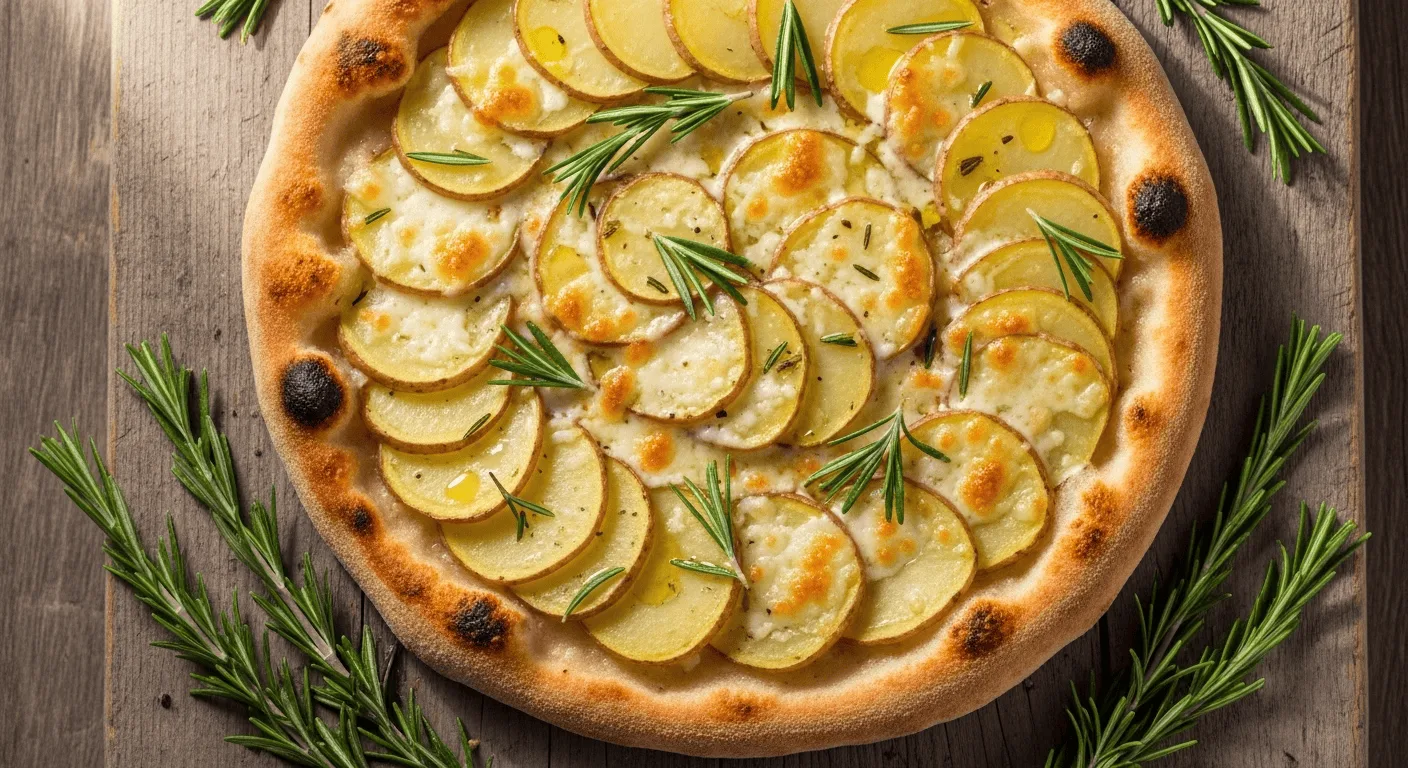
Potato Crust Pizza: Crispy, Naturally Gluten-Free
Thin overlapping potato slices bake into a crisp gluten-free pizza crust, topped with sauce, mozzarella and Parmesan. 20 min prep, 70 min total, serves 8.
Prep
20 min
Cook
50 min
Total
70 min
Servings
8 servings
Ingredients
Tools that make this easier
Optional — the recipe works without them.
As an Amazon Associate, I earn from qualifying purchases.
- Most useful here Mandoline Slicer Cuts the potatoes into even 1/8-inch rounds so the crust bakes tender-crisp. Check price on Amazon
- Rimmed Baking Sheet Holds the overlapping potato slices on parchment through both bakes. Check price on Amazon
- Pizza Wheel Cutter Slices the potato crust pizza once the mozzarella and Parmesan set a few minutes. Check price on Amazon
Instructions
- 1
Preheat oven to 400°F (200°C). Wash, peel, and slice potatoes into very thin rounds (about 1/8-inch thick) using a sharp knife or mandoline.
- 2
Pat potato slices thoroughly dry with kitchen towels or paper towels.
- 3
In a large bowl, toss dried potato slices with olive oil, garlic powder, onion powder, dried oregano, salt, and pepper until evenly coated.
- 4
Line a large baking sheet with parchment paper. Arrange seasoned potato slices in a single, overlapping layer to form a circular or rectangular crust.
- 5
Bake for 25-30 minutes until edges are golden brown and potatoes are tender-crisp. Rotate pan halfway through if needed.
- 6
Remove baking sheet from oven. Spread pizza sauce evenly over crust, leaving a small border.
- 7
Sprinkle with mozzarella and Parmesan cheeses.
- 8
Return to oven and bake for 15-20 minutes until cheese is melted, bubbly, and lightly golden.
- 9
Let pizza cool for a few minutes before garnishing with fresh basil leaves.
- 10
Slice and serve hot.
Used in this recipe: Mandoline Slicer Rimmed Baking Sheet Pizza Wheel Cutter (Amazon, affiliate links)
Notes
Tips for Success
- Crispy, golden-brown potato crust
- Naturally gluten-free and versatile
- Simple, wholesome ingredients
- Hearty and satisfying meal
Common Mistakes to Avoid
- Can become soggy if potatoes not dried thoroughly
- Thick potato slices won't crisp properly
- Overcrowding baking sheet prevents proper browning
- Dairy-free cheese may burn more easily
Nutrition (per serving)
280-350 kcal
Calories
This pizza replaces the dough with a base of thinly sliced, overlapping potatoes that is roasted until the edges turn golden and crisp, then topped with pizza sauce, mozzarella and Parmesan and baked again. Because the crust is potato, the pizza is gluten-free without any special flour or dough substitute. It is also a cheaper route to gluten-free pizza night than buying a ready-made crust.
Expect a crust that is crisp at the edges and softer toward the middle, closer to a potato gratin than a bread crust. Dry potato slices are the main thing that decides whether it turns out crisp or limp.
Table of Contents
Ingredients for Potato Crust Pizza
For the potato crust:
- 2 lbs (about 3-4 medium) Russet or Yukon Gold potatoes: Their starch helps the slices crisp and hold together.
- 2 tablespoons olive oil: Coats the slices so they brown.
- 1 teaspoon garlic powder
- 1/2 teaspoon onion powder
- 1/2 teaspoon dried oregano
- 1/4 teaspoon black pepper
- 1/2 teaspoon salt
For the toppings:
- 1/2 cup pizza sauce: Choose a thick, low-sugar sauce, since watery sauce softens the crust.
- 1 cup shredded mozzarella: Full-fat mozzarella melts better than part-skim.
- 1/4 cup grated Parmesan: Adds salt and helps the top brown.
- Fresh basil leaves: Added after baking.
- Optional: A drizzle of balsamic glaze or chili flakes.
Substitutions and what to expect
- Other potatoes: Waxy potatoes (red or new) work but give a slightly less crisp crust.
- Oil: Avocado oil or another oil that tolerates high heat is fine.
- Seasoning: Italian seasoning can replace the oregano. A pinch of red pepper flakes adds heat.
- Dairy-free cheese: Plant-based mozzarella and Parmesan work, but many melt differently and can brown faster, so watch the second bake.
- Pesto for sauce: Gives a herbier pizza and a slightly oilier surface.
- Extra toppings: Cooked mushrooms, peppers, spinach or cooked sausage all work, as long as wet vegetables are cooked down first.
How to Make Potato Pizza
- Slice the potatoes. Preheat the oven to 400°F (200°C). Wash, peel and slice the potatoes into very thin rounds, about 1/8-inch thick, with a sharp knife or a mandoline. Use the mandoline’s guard.
- Dry them. Pat the slices thoroughly dry with kitchen towels or paper towels. This is the step that decides whether the crust crisps.
- Season. Toss the dry slices in a large bowl with the olive oil, garlic powder, onion powder, oregano, salt and pepper until evenly coated.
- Build the crust. Line a large baking sheet with parchment paper. Arrange the slices in a single, overlapping layer in a circle or rectangle, with as few gaps as you can manage.
- Bake the crust. Bake for 25-30 minutes, until the edges are golden and the potatoes are tender-crisp. Rotate the pan halfway through if your oven has hot spots.
- Add toppings. Remove the pan and spread pizza sauce over the crust, leaving a small border. Sprinkle on the mozzarella and Parmesan.
- Bake again. Return to the oven for 15-20 minutes, until the cheese is melted, bubbly and lightly golden.
- Rest and serve. Let the pizza cool for a few minutes, add fresh basil, then slice and serve hot.
The whole recipe takes about 70 minutes, including 20 minutes of prep, and serves 8. If you want to get ahead, slice the potatoes up to a day early and keep them submerged in cold water in the fridge, but dry them very well before seasoning. If you like this kind of potato surface, the crispy loaded baked potatoes use the same idea of maximum surface area for browning.
Why a Potato Pizza Crust Turns Soggy or Falls Apart
- Wet potatoes. The most common problem. Slices that are not dried steam instead of crisping.
- Thick or uneven slices. Thick slices stay firm and raw-tasting while thin ones burn. Aim for even, thin rounds.
- Crowded pan. Piled-up potatoes steam. Use two baking sheets and keep a single overlapping layer.
- Under-baked crust. If the first bake is cut short, the base is too flimsy to hold toppings. It should be firm and golden before sauce goes on.
- Wet toppings. Raw mushrooms, spinach or fresh tomato release water. Cook them first.
- No parchment. Without it, the crust sticks and breaks when you lift it.
- Dairy-free cheese. It can burn before it melts, so check early in the second bake.
Quick fixes
- Soft crust: Bake the crust a little longer before adding toppings next time, and confirm the oven is fully preheated.
- Crust falls apart when sliced: The slices needed more overlap or more time on the first bake.
- Cheese browning too fast: Tent the pan loosely with foil for the last few minutes and keep it away from the broiler element.
- Bland pizza: Season the potatoes generously, add pepper flakes or fresh herbs after baking, and use a flavourful sauce and Parmesan.
Ways to Adapt the Pizza
- Less sodium: Use less salt on the potatoes, a low-sodium sauce and lower-sodium cheese.
- More vegetables: Add sautéed spinach, mushrooms, peppers, zucchini or cherry tomatoes. Cook watery vegetables first so the crust stays crisp.
- More protein: Shredded cooked chicken or turkey pepperoni adds protein. Any meat toppings should be fully cooked before they go on.
- Lighter: Use part-skim mozzarella or a little less cheese. Nutritional yeast adds a cheesy note without dairy.
The card lists roughly 280-350 kcal per serving, based on 8 servings with the Margherita toppings above. Any additions change that.
What to Serve With Potato Pizza
The pizza is rich, so pair it with something fresh or light:
- A green salad with a light vinaigrette, or the tomato cucumber salad.
- Roasted asparagus, broccoli or Brussels sprouts.
- Garlic aioli or ranch for dipping the slices.
- A bowl of fresh tomato soup on a cool evening.
How to Store and Reheat Potato Pizza
Cool the pizza to room temperature, but do not leave it out more than 2 hours. Store slices in an airtight container in the fridge for 3-4 days, with parchment between layers so they don’t stick. Freezing is possible: wrap individual slices tightly and freeze for up to 1 month, though the potatoes come out softer after thawing.
- Oven or toaster oven (best): Heat at 375°F (190°C) for 10-15 minutes on a baking sheet, until the crust is crisp again.
- Air fryer: Heat in a single layer at 350°F (175°C) for 5-8 minutes.
- Microwave: Fast, but the crust turns soft and chewy. Use 30-60 seconds only if you must.
Reheat leftovers until steaming hot throughout, to 165°F. For general guidance on leftovers, see the leftovers and food safety chart.
FAQ
Is this potato pizza gluten-free?
The crust is, since it is made only from potatoes. Check that the pizza sauce and any extra toppings, such as processed meats, are labelled gluten-free if you have celiac disease or a serious intolerance.
Can I make it ahead?
Slice the potatoes a day ahead and keep them in cold water in the fridge, then dry them thoroughly before baking. The finished pizza is best fresh, but leftovers reheat reasonably well in the oven.
What are the best potatoes for the crust?
Russet or Yukon Gold, because the starch helps them crisp and stay sturdy. Red or new potatoes are an option with a slightly less crisp result.
Can I use other toppings?
Yes. Cook any wet vegetables first and make sure meat toppings are fully cooked before they go on the pizza.