Air Fryer Pork Tenderloin
Air fryer pork tenderloin cooks in about 30 minutes with a simple Dijon-herb rub for a browned exterior and juicy center.
Prep
8 min
Cook
22 min
Total
30 min
Servings
4 servings
Ingredients
Tools that make this easier
Optional — the recipe works without them.
As an Amazon Associate, I earn from qualifying purchases.
- Most useful here 5-Quart Air Fryer Cooks the pork tenderloin at 400°F until browned. Check price on Amazon
- Instant-Read Thermometer Checks that the thickest part of the pork reaches 145°F. Check price on Amazon
- Silicone-Tipped Tongs Flip the tenderloin in the hot air fryer basket after 10 minutes. Check price on Amazon
Instructions
- 1
Preheat the air fryer to 400°F for 3 minutes. Pat the pork tenderloin dry with paper towels.
- 2
In a small bowl, mix the olive oil, Dijon mustard, brown sugar, paprika, dried thyme, garlic powder, kosher salt, and black pepper. Rub the mixture evenly over the pork tenderloin (about 5 minutes). It's ready when the seasoning forms an even coating over the entire tenderloin.
- 3
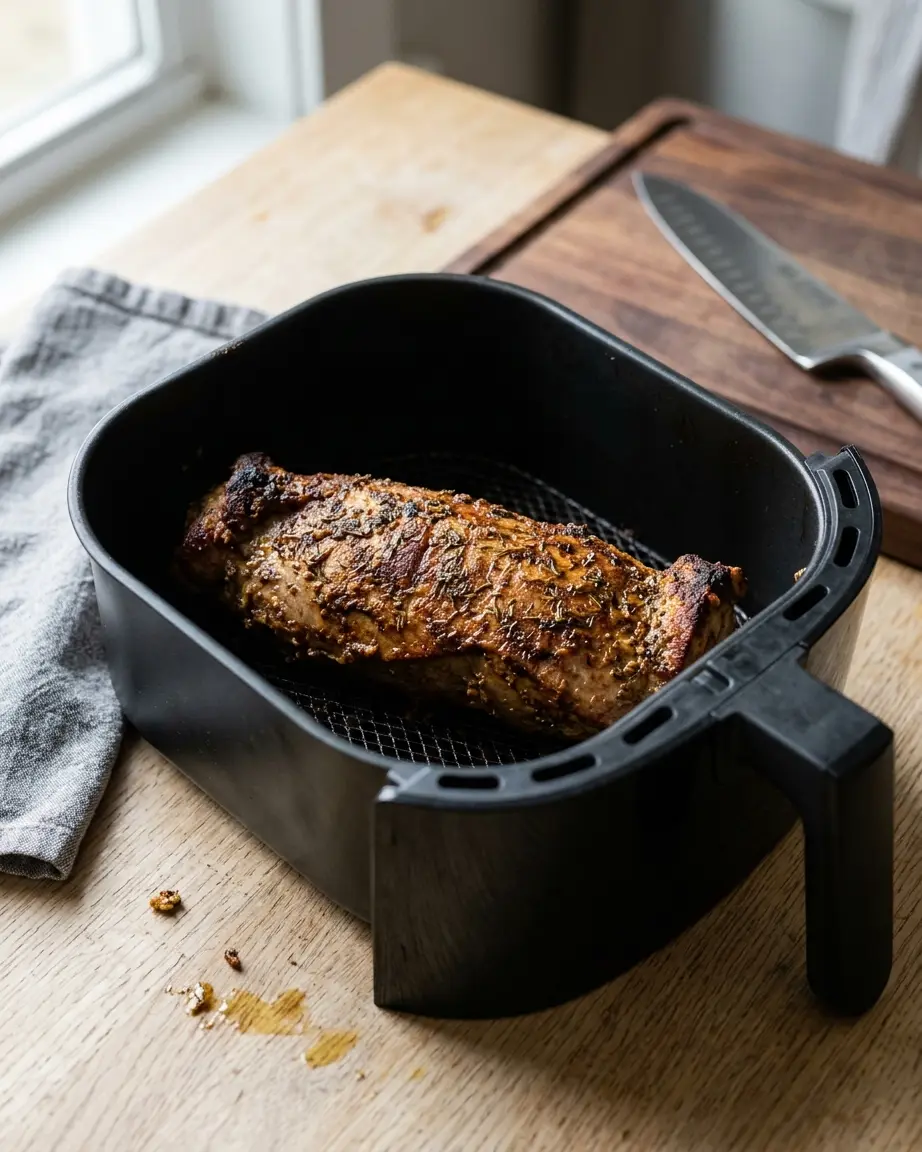
Place the tenderloin in the preheated air fryer basket and cook at 400°F for 10 minutes. It's ready when it's ready to flip when the underside is browned and the pork releases easily from the basket.
- 4
Flip the tenderloin and air fry for 6 to 8 minutes more. Check the thickest part with an instant-read thermometer; remove the pork when it reaches 145°F. It's ready when the thickest part reaches 145°F on an instant-read thermometer and the exterior is browned.
- 5
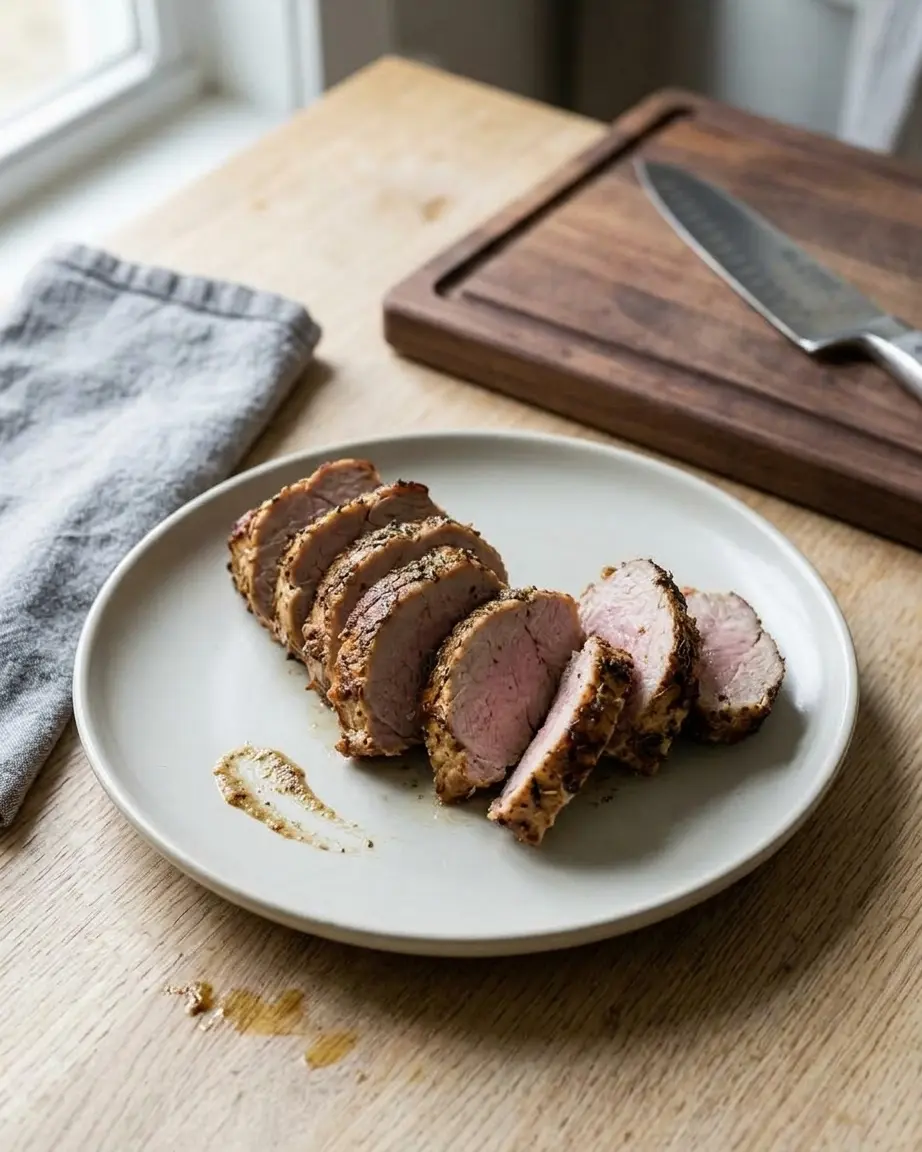
Transfer the pork to a cutting board and rest for 3 minutes before slicing crosswise. It's ready when it's ready to slice when the 3-minute rest is complete.
Used in this recipe: 5-Quart Air Fryer Instant-Read Thermometer Silicone-Tipped Tongs (Amazon, affiliate links)
Notes
Tips for Success
- Use a thermometer rather than cooking by time alone, because pork tenderloin varies in thickness and can quickly move from juicy to dry in an air fryer.
- Start checking the thickest part after the initial cooking time and remove it at 145°F. If it is already beyond that temperature, slice it thinly and serve with a moist sauce or pan juices.
Common Mistakes to Avoid
- The tenderloin is overcooked because the air fryer cooks the relatively lean meat quickly and different tenderloins vary in thickness.
Nutrition (per serving)
210 kcal
Calories
30g
Protein
2g
Carbs
7g
Fat
0g
Fiber
450mg
Sodium
Air fryer pork tenderloin is a 30-minute dinner with a simple Dijon-herb coating that browns nicely while the center stays juicy. The key is to use an instant-read thermometer rather than relying on the clock alone, since tenderloins can vary in thickness and cook quickly in an air fryer.
Ingredients
- 1 1/4 lb pork tenderloin, trimmed of silver skin and excess fat
- 1 tbsp olive oil
- 1 tbsp Dijon mustard
- 1 tsp brown sugar
- 1 tsp paprika
- 1/2 tsp dried thyme
- 1/2 tsp garlic powder
- 1/2 tsp kosher salt
- 1/4 tsp black pepper
The Dijon helps the seasoning cling to the pork, while the brown sugar helps the coating brown as the tenderloin cooks.
How To Make It
Preheat the air fryer to 400°F for 3 minutes. Pat the pork tenderloin dry with paper towels.
Mix the olive oil, Dijon mustard, brown sugar, paprika, dried thyme, garlic powder, kosher salt, and black pepper in a small bowl. Rub the mixture evenly over the pork. The coating should cover the entire tenderloin in an even layer.
Place the tenderloin in the preheated air fryer basket and cook at 400°F for 10 minutes. When it is ready to flip, the underside should be browned and the pork should release easily from the basket.
Flip the tenderloin and air fry for 6 to 8 minutes more. Check the thickest part with an instant-read thermometer and remove the pork when it reaches 145°F. The exterior should be browned at this point.
Transfer the pork to a cutting board and let it rest for 3 minutes, then slice crosswise.
The thermometer is the important check here. The USDA recommends using a food thermometer to verify that meat reaches its safe minimum internal temperature rather than relying on appearance alone. USDA Safe Minimum Internal Temperature Chart
Why the Thermometer Matters More Than the Clock
Pork tenderloin is relatively lean, and its thickness can vary from one piece to another. That means a fixed cooking time cannot account for every tenderloin. Checking the thickest part gives you a clear finish point at 145°F, helping avoid the dry texture that can come from leaving lean pork in the air fryer too long.
The Dijon-herb coating also gives the outside a useful visual cue: look for an evenly browned exterior while the thermometer determines when the center is ready.
If Your Pork Tenderloin Is Overcooked
Overcooking is the main issue to watch for with air fried pork tenderloin. The lean meat cooks quickly, and a thinner tenderloin can reach the target temperature sooner than a thicker one.
A common fix is to start checking the thickest part after the initial cooking time. If the pork has already gone beyond 145°F, slice it thinly and serve it with a moist sauce or pan juices to make the slices easier to eat.
Substitutions
These are untested alternatives, so expect some changes in flavor or texture:
- Yellow mustard for Dijon mustard: The coating will be milder and less tangy, with a slightly sharper mustard flavor.
- Dried rosemary for dried thyme: Use the same amount for a more piney, robust herb flavor.
- Maple syrup for brown sugar: The seasoning mixture will have a softer maple sweetness and will be slightly wetter.
Storage and Make-Ahead
The seasoning mixture can be combined up to 1 day ahead and refrigerated. Coat the pork shortly before air frying. The storage time for cooked pork starts when it is cooked.
Refrigerate leftovers in a covered container within 2 hours of cooking and use them within 3 to 4 days. Reheat to 165°F before serving.
Serving Ideas
Serve the sliced pork with roasted potatoes, green beans, apple slaw, or dinner rolls. For another pork-and-apple pairing, Pork Tenderloin With Apples for Cozy Family Dinners is a natural option when you want the fruit element to be part of the meal.