Pork Tenderloin With Apples
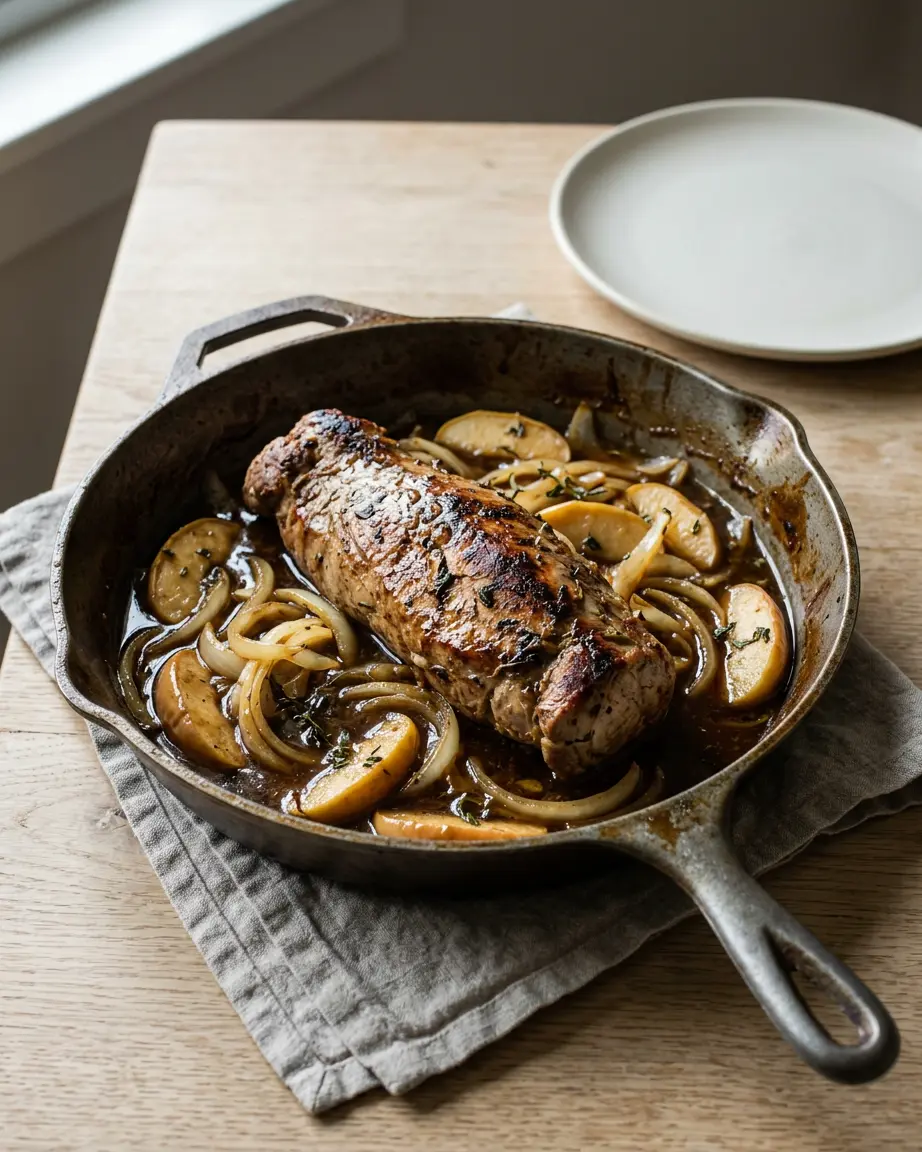
This oven-roasted pork tenderloin with apples and onions uses one pan and a quick sear for juicy pork with caramelized fruit and savory onions.
Prep
15 min
Cook
25 min
Total
40 min
Servings
6 servings
Ingredients
Tools that make this easier
Optional — the recipe works without them.
As an Amazon Associate, I earn from qualifying purchases.
Instructions
- 1
Heat the oven to 400°F. Pat the pork tenderloin dry and season all over with the kosher salt and black pepper (about 5 minutes).
- 2
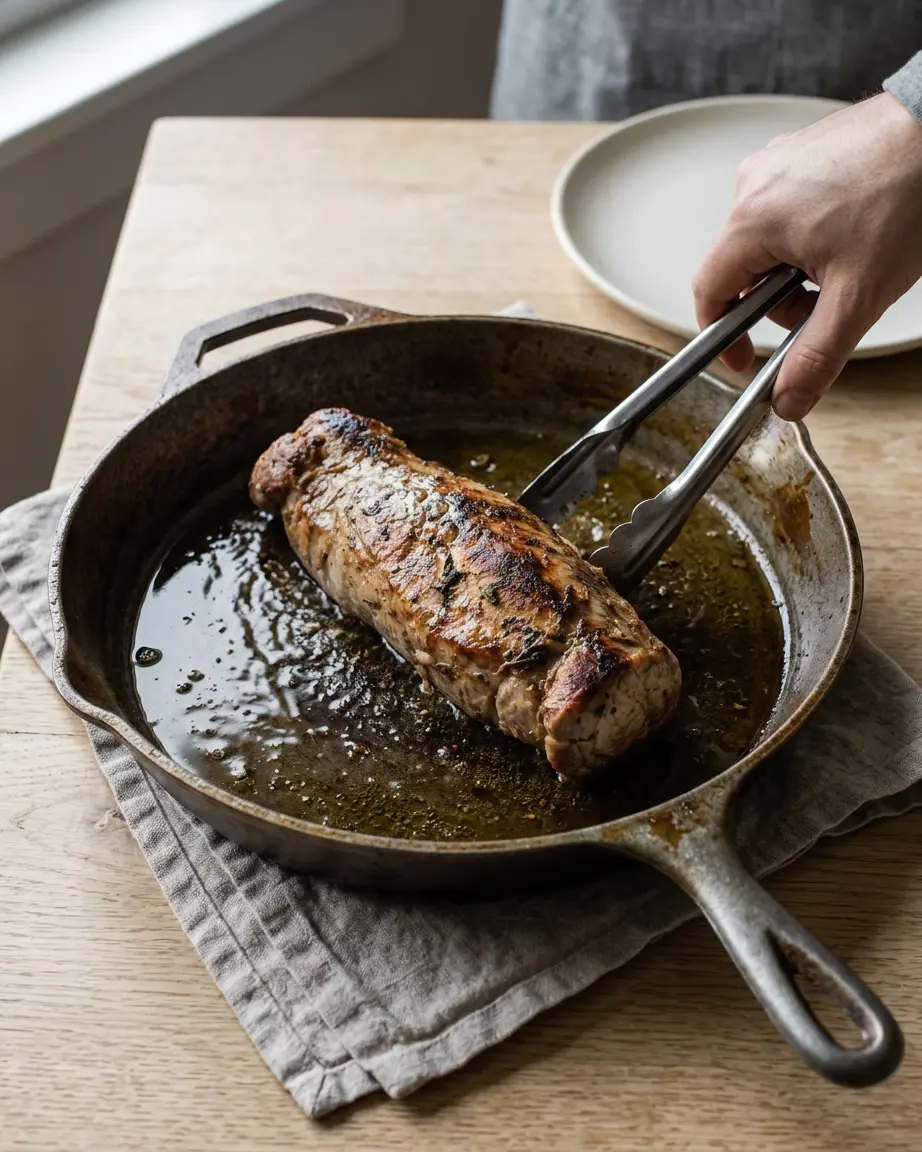
Heat the olive oil in a 12-inch oven-safe skillet over medium-high heat. Sear the pork for 2 minutes per side, turning to brown all sides, then transfer it to a plate. It's ready when the exterior is evenly browned.
- 3
Reduce the skillet heat to medium. Add the onion and apples and cook for 4 minutes, stirring once or twice, until the onion begins to soften and the apple edges take on color. It's ready when the onion is slightly softened and the apple edges are lightly browned.
- 4
Stir the thyme, apple cider, Dijon mustard, and maple syrup into the skillet. Return the pork to the center and spoon some of the cider mixture over it (about 2 minutes).
- 5
Transfer the skillet to the 400°F oven and roast for 6 minutes. Check the thickest part of the tenderloin with an instant-read thermometer; continue roasting briefly if needed until it reaches 145°F. It's ready when the thickest part registers 145°F on an instant-read thermometer.
- 6
Transfer the pork to a cutting board and let it rest for 3 minutes. Stir the butter into the hot apple-onion sauce, then slice the pork and serve with the apples and onions. It's ready when the butter is melted into the sauce and the pork has rested for 3 minutes.
Used in this recipe: Cast-Iron Skillet Instant-Read Thermometer (Amazon, affiliate links)
Notes
Tips for Success
- Sear the tenderloin before roasting it with the apples and onions. The quick browning develops savory flavor while the short oven finish helps keep the lean pork juicy.
- Start checking the thickest part with an instant-read thermometer at 6 minutes of roasting and remove the pork at 145°F. Rest it for 3 minutes before slicing.
Common Mistakes to Avoid
- The pork becomes dry because it stays in the oven too long after reaching its safe temperature.
Nutrition (per serving)
220 kcal
Calories
24g
Protein
16g
Carbs
7g
Fat
2g
Fiber
500mg
Sodium
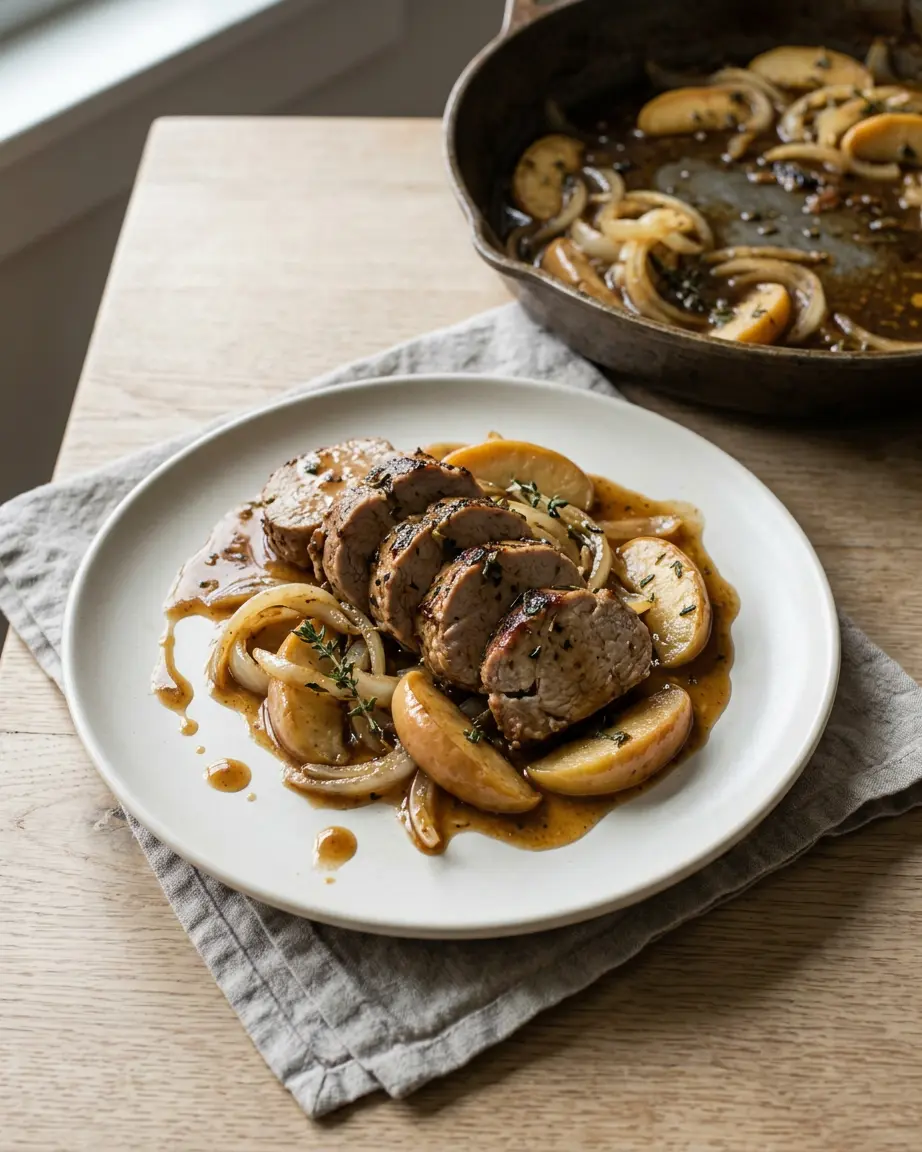
Pork tenderloin with apples is a one-skillet fall dinner: the pork is seared on the stovetop, then finishes in the oven on a bed of apple wedges and onions in a cider, Dijon and maple sauce. It takes about 40 minutes, and the pan sauce is ready to spoon over the sliced pork as soon as it has rested.
Ingredients
- 1 1/2 lb pork tenderloin, trimmed of silver skin
- 1 1/2 tsp kosher salt
- 1/2 tsp freshly ground black pepper
- 1 tbsp olive oil
- 1 large yellow onion, thinly sliced
- 2 medium apples, cored and cut into 1/2-inch wedges
- 1 tbsp fresh thyme leaves, picked from stems
- 1/2 cup apple cider
- 1 tbsp Dijon mustard
- 1 tbsp maple syrup
- 1 tbsp unsalted butter
Use a 12-inch oven-safe skillet so the searing, the apples and the roasting all happen in one pan. Cut the apples into 1/2-inch wedges rather than thin slices; wedges hold their shape in the oven, where thin slices would collapse into the sauce. Firm, sweet-tart apples such as Honeycrisp, Gala or Braeburn keep their shape best, while softer McIntosh will break down into a looser, applesauce-like sauce.
How to Make Pork Tenderloin With Apples
Heat the oven to 400°F. Pat the pork tenderloin dry and season it all over with the kosher salt and black pepper.
Heat the olive oil in a 12-inch oven-safe skillet over medium-high heat. Sear the pork for 2 minutes per side, turning to brown all sides, then transfer it to a plate.
Reduce the heat to medium. Add the onion and apples and cook for 4 minutes, stirring once or twice, until the onion starts to soften and the apple edges are lightly browned.
Stir the thyme, apple cider, Dijon mustard and maple syrup into the skillet. Return the pork to the center and spoon some of the cider mixture over it.
Transfer the skillet to the 400°F oven and roast for 6 minutes, then check the thickest part of the tenderloin with an instant-read thermometer. Keep roasting and checking every couple of minutes until it reads 145°F. A thicker tenderloin will need longer than a thin one.
Transfer the pork to a cutting board and let it rest for 3 minutes. Stir the butter into the hot apple-onion sauce, then slice the pork and serve it with the apples and onions.
Keeping a Lean Tenderloin Juicy
Tenderloin has almost no fat, so it goes from juicy to dry quickly once it passes its safe temperature. The sear does the flavor work up front, which means the oven time only has to finish the center. That is why you check early instead of trusting a fixed roasting time: take the pork out the moment the thermometer reads 145°F, then give it the full 3-minute rest before slicing so the juices stay in the meat.
A little blush of pink in the center is normal for pork cooked to 145°F. Go by the thermometer, not the color. The USDA’s safe minimum temperature chart lists 145°F with a 3-minute rest for whole cuts of pork.
If the sauce looks thin when the pork comes out, set the skillet over medium heat and simmer it for a minute or two while the pork rests, then stir in the butter. The handle is still oven-hot, so use a mitt.
Swaps for the Cider, Mustard and Maple
- Chicken broth instead of apple cider: expect a less fruity, more savory sauce. You can add another teaspoon of maple syrup if you want it sweeter.
- Whole-grain mustard instead of Dijon: expect a coarser sauce with a milder mustard bite.
- Honey instead of maple syrup: expect a slightly sweeter, more floral sauce.
Make-Ahead, Storage and Reheating
You can trim and season the pork up to 1 day ahead and keep it covered in the refrigerator. Cut the apples just before cooking so they don’t brown.
Refrigerate leftovers in a covered container within 2 hours of cooking and eat them within 3 to 4 days. Reheat the pork and apples to 165°F, covered, with a splash of cider or water so the lean slices don’t dry out.
Sides for Pork and Apples
Mashed potatoes are the easiest match for the apple-onion sauce, and crusty bread works for mopping it up. For something fresh, a sharp salad such as this goat cheese beet salad balances the sweet apples, or serve roasted Brussels sprouts. If you like fruit with pork, this roasted pork tenderloin with plum sauce uses the same cut with a tangier sauce, and prosciutto-wrapped pork tenderloin is a good option for a dinner party.
FAQ
Can I use two small tenderloins instead of one large one?
Yes, as long as the total is about 1 1/2 lb and both fit in the skillet without touching. Smaller tenderloins are thinner, so check them with the thermometer at 6 minutes and pull each one as it reaches 145°F.
Can I peel the apples?
You can. Peeled wedges soften a little faster and blend more into the sauce; skin-on wedges hold their shape better and add color.
Can I make this without an oven-safe skillet?
Sear the pork and cook the apples and onions in a regular skillet, then move everything into a baking dish, pour the sauce around the pork and roast. Expect a little less browning on the apples, and start checking the pork at the same 6 minutes.