Mozzarella in Carrozza: Ultimate Fried Cheese Sandwich
Mozzarella in carrozza: fresh mozzarella sealed in crustless bread, coated in egg and panko, then fried until crisp. 6 sandwiches in 27 minutes.
Prep
20 min
Cook
7 min
Total
27 min
Servings
6 sandwiches (12 halves)
Ingredients
Tools that make this easier
Optional — the recipe works without them.
As an Amazon Associate, I earn from qualifying purchases.
- Most useful here Cast-Iron Skillet Fry 2-3 mozzarella sandwiches at a time until golden and crispy. Check price on Amazon
- Instant-Read Thermometer Checks the frying oil reaches 350-375°F before sandwiches go in. Check price on Amazon
- Wire Cooling Rack Drains fried sandwiches over paper towels after they leave the skillet. Check price on Amazon
Instructions
- 1
If your fresh mozzarella is packed in water, remove it and pat it thoroughly dry with paper towels. Slice into 1/4-inch (0.6 cm) thick pieces.
- 2
Lay out bread slices and trim off the crusts from all sides of each slice.
- 3
Set up dredging station with flour, egg wash, and breadcrumbs in separate shallow dishes.
- 4
On half of your bread slices, place 2 slices of mozzarella. Season lightly with salt and pepper.
- 5
Top with remaining bread slices and gently press down to ensure a good seal.
- 6
Briefly dip each assembled sandwich into milk with a pinch of salt, just enough to moisten the bread slightly but not soak it.
- 7
Dredge each milk-moistened sandwich in flour, ensuring complete coating on all sides. Shake off excess.
- 8
Dip each floured sandwich into egg mixture, coating completely. Let excess drip off.
- 9
For extra crispy exterior, dip egg-washed sandwich into Panko breadcrumbs, pressing gently for even coating.
- 10
Heat oil in large skillet to 350-375°F (175-190°C). Use thermometer to verify temperature.
- 11
Carefully place 2-3 sandwiches into hot oil, ensuring not to overcrowd pan.
- 12
Fry for 2-3 minutes per side until golden brown and crispy.
- 13
Remove from oil and drain on wire rack over paper towels. Sprinkle with extra salt if desired.
- 14
Cut each sandwich in half diagonally and serve immediately with lemon wedges or marinara sauce.
Used in this recipe: Cast-Iron Skillet Instant-Read Thermometer Wire Cooling Rack (Amazon, affiliate links)
Notes
Tips for Success
- Crispy, golden-brown crust with satisfying crunch
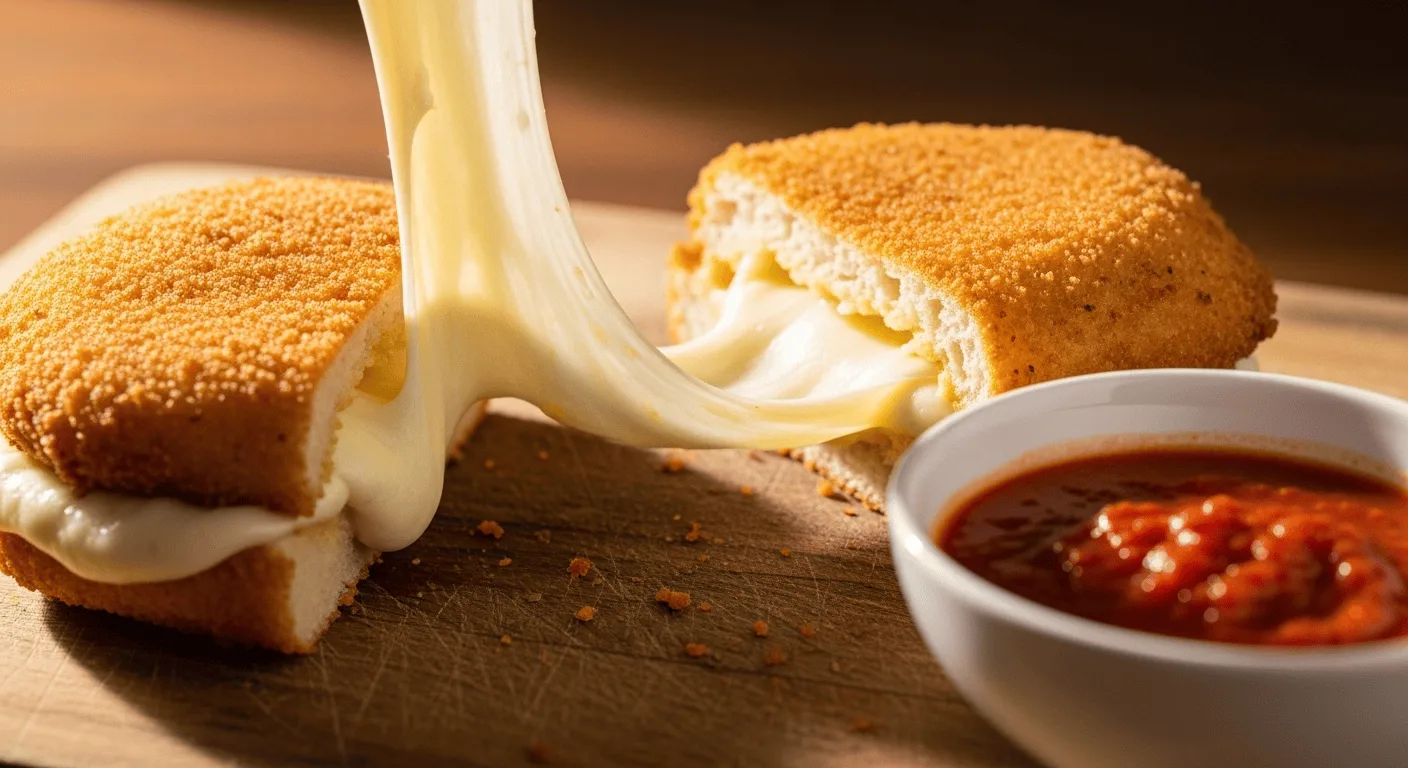
- Molten, stretchy center of warm mozzarella
- Italian comfort food that feels elegant
- Surprisingly easy to make at home
- Perfect balance of crispy exterior and melty interior
Common Mistakes to Avoid
- Can become soggy if mozzarella is not dried properly
- Cheese may ooze out if edges are not sealed well
- Oil temperature must be carefully monitored
- Best enjoyed immediately after frying
- Can be greasy if oil temperature is too low
Nutrition (per serving)
350-450 kcal
Calories
Mozzarella in carrozza is a Neapolitan fried cheese sandwich: slices of fresh mozzarella sealed between crustless white bread, dipped in milk, floured, coated in egg and fried until the outside is crisp and the cheese inside has turned soft and stretchy. The name means “mozzarella in a carriage”, because the bread carries the cheese. It sits somewhere between a grilled cheese and a mozzarella stick, and it takes about 27 minutes from start to finish for 6 sandwiches (12 halves).
The method is simple, but three details decide whether it works: dry cheese, well-sealed edges and oil held at the right temperature. The notes below cover each one.
Ingredients
The list is short, so each ingredient matters.
- Fresh mozzarella: 1 pound (about 450g), well-drained and sliced into 1/4-inch (0.6 cm) thick rounds or rectangles. Fresh mozzarella gives the soft, stretchy center. Avoid pre-shredded cheese, which contains anti-caking starch and melts unevenly.
- White sandwich bread: 12 slices of good-quality, sturdy bread. Day-old bread is slightly drier, so it soaks up less oil and holds its shape better in the pan.
- All-purpose flour: 1/2 cup (60g) for dredging.
- Eggs: 2 large eggs, whisked with a splash of milk or water.
- Milk: 1/4 cup (60ml), whole milk preferred, or water, for dipping. This moistens the bread so the edges stick together.
- Salt: 1/2 teaspoon, plus more to taste.
- Black pepper: 1/4 teaspoon freshly ground, plus more to taste.
- Panko breadcrumbs (optional, but recommended): 1 cup (100g). Traditional versions often skip them, but they add a sturdier, crunchier shell.
- Vegetable or canola oil: About 3–4 cups (700–950ml), enough to fill your pan about 1.5 inches (3.8 cm) deep.
- Lemon wedges and marinara sauce: Optional, for serving.
Substitutions and what to expect
- Low-moisture mozzarella instead of fresh: It slices cleanly and releases less water, so the crust stays crisper. Expect a firmer, saltier filling with less of the soft, milky stretch.
- Provolone or fontina: Both melt well. Expect a sharper, more savory sandwich that is closer to a grilled cheese in flavor.
- Brioche or Italian bread: These work if the slices are thin and even. Brioche browns faster because of its sugar and butter, so watch the heat.
- Water instead of milk: The seal still holds. Expect a slightly less rich, less golden coating.
- Olive oil: Not a good choice for this depth of frying. Stick to a neutral oil with a high smoke point.
- Extra flavor: A pinch of dried oregano or garlic powder in the flour, or a spoonful of grated Parmesan in the panko, adds flavor without changing the method.
How to Make Mozzarella in Carrozza
Set out three shallow dishes before you start: one for milk, one for flour, one for the egg wash, plus a fourth for panko if you use it. Having everything lined up makes the coating go quickly.
Dry the mozzarella. Take the mozzarella out of its liquid and pat it thoroughly dry with paper towels. Slice it 1/4 inch (0.6 cm) thick. You need about 2 slices per sandwich.
Trim the bread. Cut the crusts off every slice. Crustless edges press together more easily and seal better.
Assemble. Lay 2 slices of mozzarella on half of the bread slices, leaving a small border so the cheese does not touch the edges. Season lightly with salt and pepper, top with the remaining bread and press the edges together firmly.
Moisten and seal. Whisk the milk with a pinch of salt. Dip each sandwich briefly, just enough to dampen the bread without soaking it, then press the edges again. This is the step that keeps the cheese inside.
Flour. Dredge each sandwich in the flour on all sides, including the edges, and shake off the excess.
Egg. Whisk the eggs with a splash of milk or water and a pinch of salt and pepper. Dip each floured sandwich to coat it completely and let the excess drip off.
Panko (optional). Press each sandwich into the panko so the crumbs cover every side.
Heat the oil. Pour oil about 1.5 inches (3.8 cm) deep into a heavy skillet or Dutch oven and heat over medium-high to 350–375°F (175–190°C). A thermometer is the only reliable way to know you are in range.
Fry in batches. Fry 2–3 sandwiches at a time for 2–3 minutes per side, until deep golden and crisp. Let the oil come back up to temperature between batches.
Drain and serve. Lift the sandwiches onto a wire rack set over a paper-towel-lined baking sheet, sprinkle with a little salt, cut each one in half diagonally and serve right away with lemon wedges or warm marinara.
Baking or air frying instead
If you would rather not deep-fry, bread the sandwiches the same way and spray them lightly with oil. Bake at 400°F (200°C) for 10–15 minutes, flipping halfway, or air fry at 375°F (190°C) for 6–10 minutes, flipping halfway. Expect a drier, less evenly browned crust than the fried version, and a higher chance of cheese leaking if the edges are not well sealed.
Why the Cheese Leaks or the Crust Turns Greasy
Most problems with this sandwich trace back to moisture, the seal or the oil temperature.
- Cheese oozes into the oil: The edges were not sealed. Leave a border around the cheese, trim the crusts, press the edges after the milk dip and make sure flour and egg cover the sides as well as the faces.
- Soggy or oily crust: The oil was below 350°F, or too many sandwiches went in at once and dropped the temperature. The bread absorbs oil instead of crisping. Fry in small batches and check the thermometer before each one.
- Crust burns before the cheese softens: The oil is above 375°F. Turn the heat down slightly and wait for it to settle back into range.
- Spattering and a steamy, limp coating: The mozzarella was wet. Fresh mozzarella holds a lot of water, so pat it dry, and pat again after slicing if the cut faces look damp.
- Sandwiches go soft after frying: They were drained directly on paper towels. A wire rack lets air circulate so the bottom does not steam.
- Uneven browning: Your pan has hot spots. Move the sandwiches gently and turn them only once, after the first side is fully golden.
What to Serve With It
Warm marinara is the classic dip, because its acidity cuts through the fried bread and rich cheese. Basil pesto or a garlic aioli also work. A squeeze of lemon over the hot sandwich does a similar job with less effort.
For a light lunch, pair it with a bowl of fresh tomato soup, which plays the same role as the marinara, or a plate of caprese salad with balsamic glaze for a fresh, cool contrast. For a party snack, cut each sandwich into quarters before coating and fry them as bite-size pieces; they cook slightly faster, so check them after about 2 minutes per side.
If you like this style of hot, cheesy sandwich, the easy grilled cheese sandwich uses the pan instead of a deep fry, and the croque madame is the French version with ham, béchamel and a fried egg.
Making It Ahead, Storing and Reheating
This sandwich is at its best within a few minutes of frying, while the crust is crisp and the cheese is soft.
- Make ahead: Assemble the sandwiches (trimmed bread, cheese, seasoning) up to a few hours ahead and keep them covered in the fridge. Do the milk dip, flour, egg and panko just before frying; if the coating sits, it absorbs moisture and fries up soft.
- Storing leftovers: Refrigerate within 2 hours in an airtight container. The texture is best within 1–2 days, and leftovers should be eaten within 3–4 days. Expect the crust to lose its crunch.
- Reheating: Skip the microwave, which makes the bread soggy. Reheat in a 350°F (175°C) oven or a 325°F (160°C) air fryer for about 5–10 minutes, until the center reaches 165°F (74°C) and the outside has crisped again.
For general guidance on safe leftover handling, see the USDA’s leftovers and food safety page.
FAQ
What kind of bread works best?
Sturdy, evenly sliced white sandwich bread, ideally a day old. Very soft or thin bread tears when you seal it, and crusty artisan loaves are hard to press closed.
Is the panko coating traditional?
Not strictly. Many Neapolitan versions stop at flour and egg, which gives a thinner, more custardy crust. Panko adds crunch and an extra barrier that helps keep the cheese inside.
Where does mozzarella in carrozza come from?
It is a classic of Naples and the surrounding Campania region, traditionally a way to use up day-old bread and mozzarella that was no longer fresh enough to eat on its own.
Can you freeze it?
It is not recommended. Fresh mozzarella releases water as it thaws, which softens the coating. If you want to prepare ahead, assemble the sandwiches a few hours in advance instead and coat and fry them to order.