One-Pot Lasagna Soup
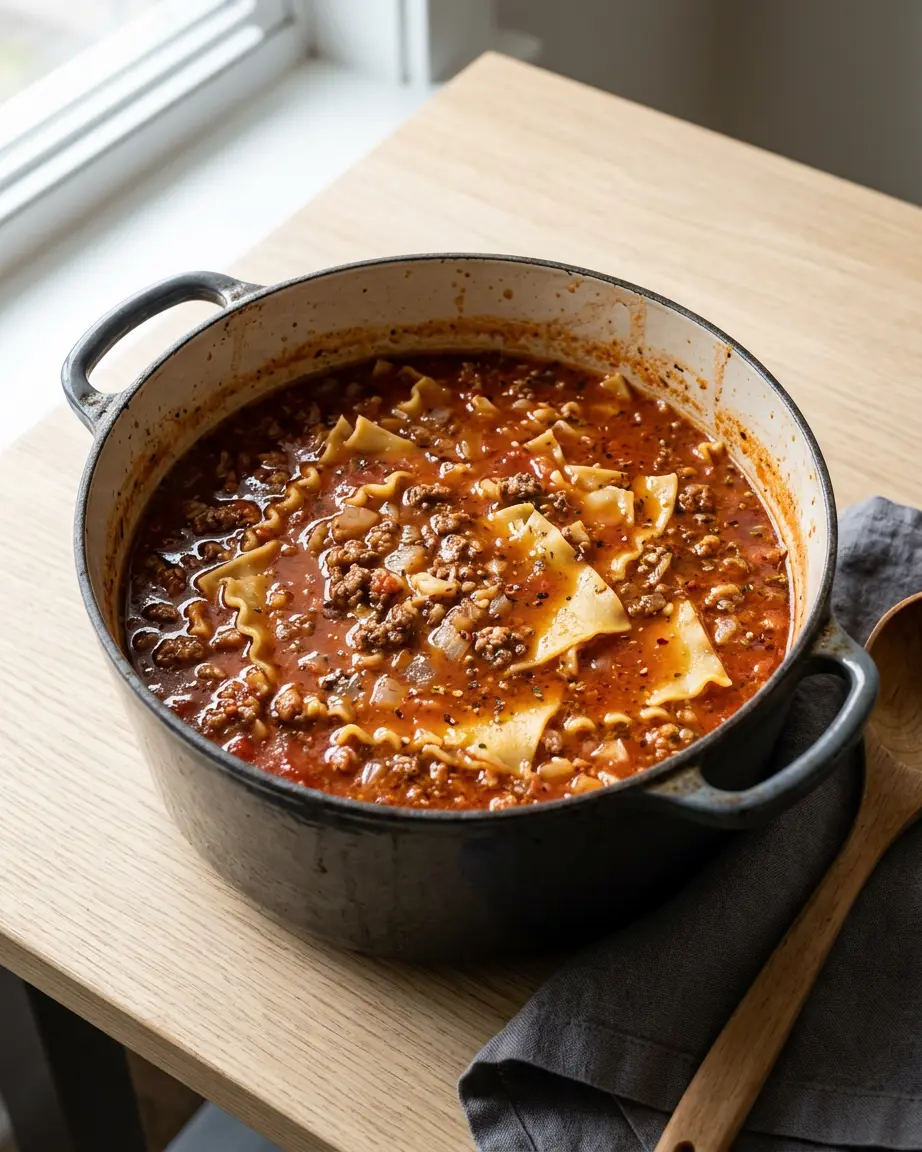
This one-pot lasagna soup recipe combines ground beef, broken lasagna noodles, tomatoes, Italian herbs, and a creamy ricotta topping in about 40 minutes for a hearty dinner without layering a traditional lasagna.
Prep
10 min
Cook
30 min
Total
40 min
Servings
8 servings (about 10 cups)
Ingredients
Tools that make this easier
Optional — the recipe works without them.
As an Amazon Associate, I earn from qualifying purchases.
- Most useful here Instant-Read Thermometer Checks that the ground beef crumbles reach 160°F before adding the lasagna noodles. Check price on Amazon
- 6-Quart Stock Pot Holds the beef, broth, tomatoes, and broken lasagna noodles as the soup simmers. Check price on Amazon
- Box Grater Grates Parmesan finely for mixing into the ricotta and mozzarella topping. Check price on Amazon
Instructions
- 1
Heat the olive oil in a 6-quart Dutch oven over medium-high heat. Add the ground beef and diced onion and cook for 6 to 8 minutes, breaking the beef into small crumbles and stirring the onion until softened. It's ready when the beef is browned in small crumbles and the onion is softened.
- 2
Add the minced garlic, tomato paste, Italian seasoning, dried oregano, and optional red pepper flakes. Cook over medium heat for 1 to 2 minutes, stirring constantly to coat the meat and lightly toast the tomato paste. It's ready when the garlic smells fragrant and the tomato paste darkens slightly without scorching.
- 3
Pour in the crushed tomatoes, tomato sauce, beef broth, salt, and black pepper. Stir, scraping up any browned bits from the bottom of the pot, and bring the soup to a boil over medium-high heat (about 4 minutes). It's ready when the broth is evenly combined and bubbles steadily across the surface.
- 4
Reduce the heat to maintain a gentle simmer and cook the ground beef mixture for 5 minutes. Check the thickest beef crumbles with an instant-read thermometer; ground beef must reach at least 160°F before adding the noodles. It's ready when the thermometer reads at least 160°F in the largest beef crumbles.
- 5
Stir in the broken lasagna noodles and simmer uncovered over medium-low heat for 9 to 11 minutes, stirring frequently so the pasta does not stick to the bottom. Follow the package timing and check a noodle for tenderness. It's ready when the noodles are tender but still hold their shape and the broth has thickened slightly.
- 6
While the noodles cook, combine the ricotta, mozzarella, and Parmesan in a small mixing bowl. Stir until evenly mixed (about 3 minutes). It's ready when the cheeses form a thick, evenly combined topping.
- 7
Taste the soup and adjust the salt and black pepper if needed. Ladle into bowls, add a generous spoonful of the cheese mixture, and finish with chopped fresh basil if using (about 3 minutes). It's ready when each bowl has tender noodles, plenty of beef and tomato broth, and a creamy cheese topping.
Used in this recipe: Instant-Read Thermometer 6-Quart Stock Pot Box Grater (Amazon, affiliate links)
Notes
Tips for Success
- Cook the broken lasagna noodles directly in the seasoned tomato broth so they absorb flavor and help thicken the soup. Keep the soup at a gentle simmer and stir frequently to prevent sticking while preserving enough broth for serving.
- Stir frequently during cooking and serve soon after the noodles become tender. If the soup thickens, add warm beef broth in 1/2-cup increments until it reaches the desired consistency. For leftovers, store the noodles with the soup and expect to add broth when reheating, or cook the noodles separately if preparing the soup well ahead.
Common Mistakes to Avoid
- The soup becomes too thick because the noodles absorb more broth than expected, especially if the pot sits before serving.
Nutrition (per serving)
430 kcal
Calories
28g
Protein
35g
Carbs
19g
Fat
4g
Fiber
1350mg
Sodium
This one-pot lasagna soup brings the familiar flavors of classic lasagna to the table in about 40 minutes, without the work of layering pasta and sauce. Ground beef, tomatoes, Italian herbs, and broken lasagna noodles simmer together in a rich broth, while a separate ricotta, mozzarella, and Parmesan topping adds a creamy finish to every bowl.
Ingredients
- 1 tbsp olive oil
- 1 lb lean ground beef, preferably 85% to 90% lean
- 1 medium yellow onion, diced
- 4 cloves garlic, minced
- 2 tbsp tomato paste
- 2 tsp Italian seasoning
- 1 tsp dried oregano
- 1/4 tsp crushed red pepper flakes (optional)
- 1 (28-ounce) can crushed tomatoes
- 1 (8-ounce) can tomato sauce
- 6 cups beef broth
- 1 tsp kosher salt, or to taste depending on broth saltiness
- 1/2 tsp freshly ground black pepper
- 8 oz uncooked lasagna noodles, broken into roughly 2-inch pieces For the cheese topping:
- 1 cup whole-milk ricotta cheese
- 1 cup shredded mozzarella cheese
- 1/2 cup finely grated Parmesan cheese
- 2 tbsp chopped fresh basil (optional) The ricotta topping is mixed separately rather than stirred into the pot. This keeps the tomato broth distinct and lets each bowl get a creamy layer of cheese.
How To Make It
- Brown the beef and soften the onion. Heat the olive oil in a 6-quart Dutch oven over medium-high heat. Add the ground beef and diced onion, breaking the beef into small crumbles as it cooks. Continue until the beef is browned and the onion is softened.
- Build the flavor base. Add the garlic, tomato paste, Italian seasoning, oregano, and red pepper flakes if using. Stir constantly over medium heat for 1 to 2 minutes, until the garlic smells fragrant and the tomato paste darkens slightly. Keep stirring to prevent the garlic from burning or the paste from scorching.
- Add the tomatoes and broth. Pour in the crushed tomatoes, tomato sauce, beef broth, salt, and black pepper. Scrape up any browned bits from the bottom of the pot and stir until the broth is evenly combined. Bring the soup to a boil over medium-high heat.
- Simmer the beef mixture. Reduce the heat to maintain a gentle simmer and cook for 5 minutes. Check the largest beef crumbles with an instant-read thermometer; ground beef must reach at least 160°F before the noodles go in.
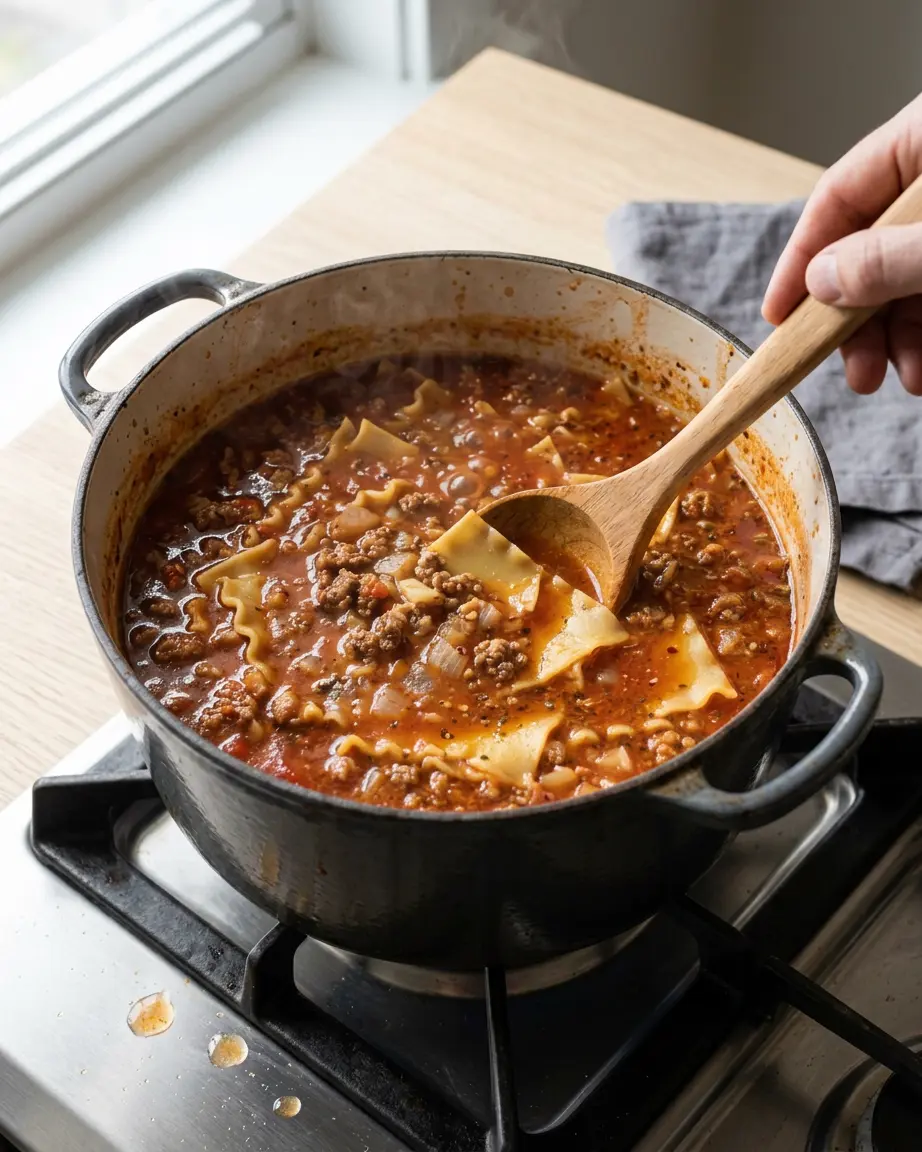
- Cook the lasagna noodles in the soup. Stir in the broken noodles and simmer uncovered over medium-low heat for 9 to 11 minutes, stirring frequently to keep the pasta from sticking to the bottom. Follow the package timing and check a noodle for tenderness. The noodles should be tender but still hold their shape, and the broth should thicken slightly.
- Mix the cheese topping. While the noodles cook, combine the ricotta, mozzarella, and Parmesan in a small bowl. Stir until the cheeses form a thick, evenly mixed topping.
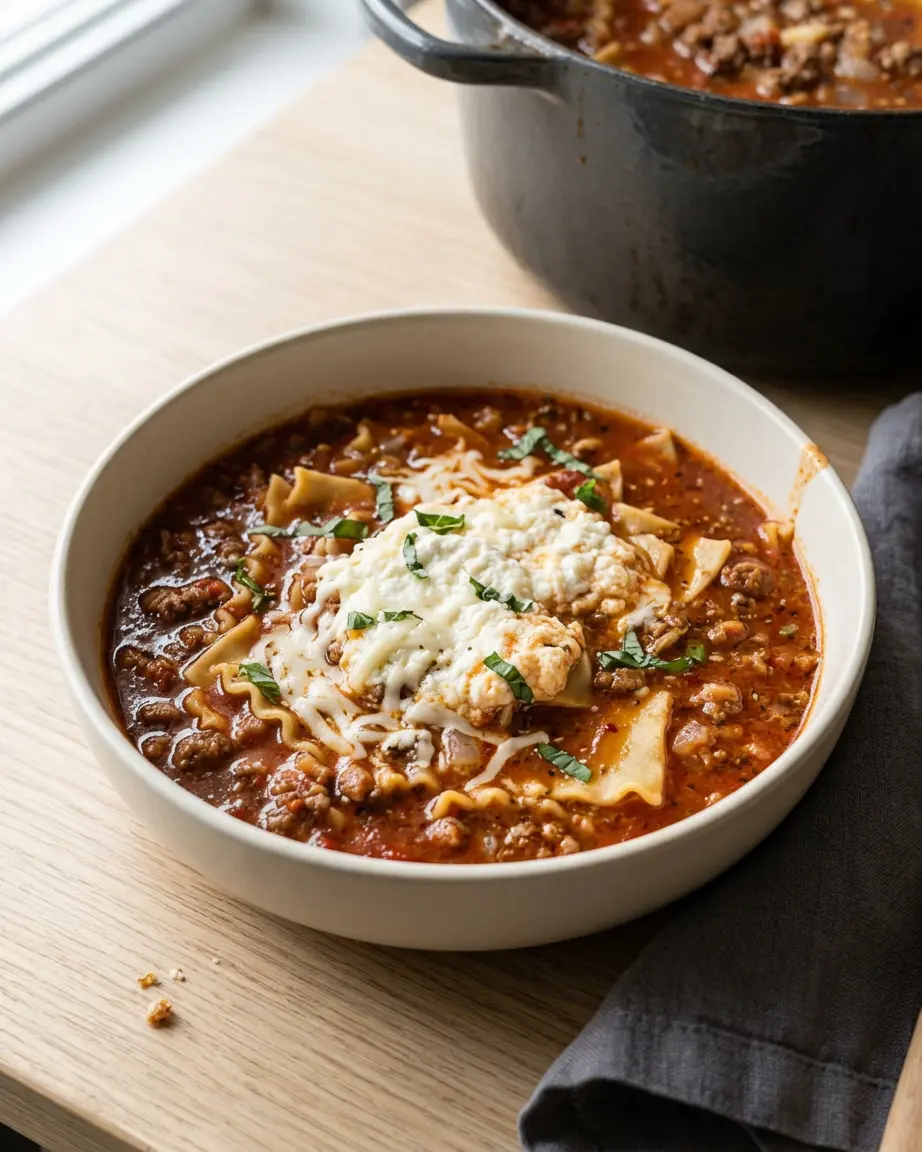
- Finish and serve. Taste the soup and adjust the salt and black pepper if needed. Ladle into bowls, add a generous spoonful of the cheese mixture, and finish with fresh basil if using.
Why Cooking the Noodles in the Broth Matters
Cooking the broken lasagna noodles directly in the seasoned tomato broth gives them more flavor than cooking them separately in plain water. As the pasta releases starch, it also helps thicken the soup, creating a fuller texture without needing a separate thickener. The balance is important: the noodles should soften while enough broth remains to make the dish spoonable. A gentle simmer and frequent stirring help the pasta cook evenly without sticking or turning mushy. The separate cheese topping also makes a difference. Ricotta brings a soft, creamy texture, mozzarella adds a stretchy richness, and Parmesan contributes a sharper, savory flavor. Mixing them in a bowl keeps the topping thick enough to spoon over the soup.
How to Keep Lasagna Soup From Getting Too Thick
Lasagna noodles continue absorbing liquid as the soup sits, so a pot that starts out brothy can become much thicker before the meal is finished.
- Stir while the noodles cook. This helps prevent sticking and encourages even cooking.
- Serve soon after the noodles turn tender. Leaving the pasta in hot broth for too long can make it softer and reduce the amount of liquid in each serving.
- Adjust the broth if needed. If the soup becomes too thick, stir in warm beef broth in 1/2-cup increments until it reaches the consistency you want. For leftovers, expect to add broth or water when reheating. If preparing the soup well ahead, cooking the noodles separately is another option that helps preserve the texture.
Substitutions
These are untested alternatives, so expect some changes in flavor or texture.
- Ground Italian sausage for ground beef: Sausage adds a stronger fennel and herb flavor and usually more fat and salt. Drain excess grease before adding the seasonings.
- Chicken broth for beef broth: The result will have a lighter broth and a milder beef flavor. Adjust the salt to taste.
- Cottage cheese for whole-milk ricotta: The topping will be slightly tangier and less creamy, with more visible curds. Blend the cottage cheese first for a smoother texture.
- Short pasta for lasagna noodles: Mafaldine or bow-tie pasta can replace the broken lasagna noodles, although the soup will look less like traditional lasagna. Cooking time will vary by pasta shape.
Make-Ahead and Storage
Make ahead: Prepare the beef and tomato broth up to 2 days ahead. Cool it promptly and refrigerate it in an airtight container. When ready to serve, reheat the broth to a simmer, then add the uncooked broken lasagna noodles and cook according to the package timing. The storage period starts when the broth is cooked, not when the soup is assembled. The ricotta, mozzarella, and Parmesan topping can be mixed up to 1 day ahead and refrigerated separately. Avoid cooking the noodles in advance if you want them to retain their texture. Refrigerating leftovers: Refrigerate the soup within 2 hours of cooking in shallow, airtight containers and keep it for 3 to 4 days. The noodles will continue absorbing broth, so add a splash of beef broth or water when reheating. Reheat on the stovetop over medium heat or in the microwave until the soup reaches 165°F, stirring to heat evenly. Follow the USDA’s food safety guidance for leftovers. Freezing: For better noodle texture, cool the soup base promptly and freeze it without the noodles for up to 3 months. Thaw overnight in the refrigerator, reheat to a simmer, and cook fresh noodles in the broth. Store leftover cheese topping separately for up to 4 days.
Serving Ideas
- Garlic bread: A good choice for soaking up the extra tomato broth.
- Crusty Italian bread: Adds a crisp contrast to the soft noodles and creamy topping.
- Simple green salad with balsamic vinaigrette: Provides a fresh, tangy side alongside the rich soup.
- Extra Parmesan and fresh basil: Add these to individual bowls for a more pronounced savory flavor and fresh herbal finish. For another way to enjoy the familiar flavors of lasagna, pair the soup with these easy lasagna flatbreads.
FAQ
Can you make lasagna soup in a crockpot?
This recipe uses a stovetop method, so its timing and noodle instructions are not a tested crockpot method. For a slow-cooker version, the cooking sequence and when to add the noodles would need to be adapted.
Can you freeze lasagna soup?
Yes. For the best noodle texture, freeze the soup base without the noodles for up to 3 months. Thaw it overnight in the refrigerator, bring it to a simmer, and cook fresh noodles in the broth before serving.
How do you keep lasagna soup from getting too thick?
Stir frequently as the noodles cook and serve the soup soon after they become tender. If it thickens while sitting or reheating, add warm beef broth in 1/2-cup increments until the consistency is right.