Teriyaki Pork Tenderloin
Teriyaki pork tenderloin uses a quick homemade glaze and a short oven finish to produce juicy pork with a glossy, savory-sweet coating.
Prep
10 min
Cook
25 min
Total
35 min
Servings
4 servings
Ingredients
Tools that make this easier
Optional — the recipe works without them.
As an Amazon Associate, I earn from qualifying purchases.
- Most useful here Instant-Read Thermometer Checks that the pork tenderloin reaches 145°F before resting after roasting. Check price on Amazon
- Silicone Basting Brush Brushes teriyaki sauce over the pork as it sears and roasts. Check price on Amazon
- Stainless Steel Saucepan Simmer the soy sauce, pineapple juice, sugar, ginger, and garlic into teriyaki glaze. Check price on Amazon
Instructions
- 1
Heat the oven to 400°F. In a small saucepan over medium heat, whisk together the soy sauce, pineapple juice, brown sugar, rice vinegar, ginger, and garlic; simmer for 4 minutes. It's ready when the sugar has dissolved and the mixture smells fragrant.
- 2
Whisk the cornstarch slurry into the saucepan and cook over medium heat for 1 minute, stirring constantly. Remove about 1/3 cup of the thickened sauce to a clean bowl for glazing the cooked pork. It's ready when the sauce lightly coats a spoon.
- 3
Pat the pork dry and season all over with the salt and pepper. Heat the oil in a 12-inch oven-safe skillet over medium-high heat, then sear the pork for 2 minutes per side. It's ready when the pork has browned on all sides.
- 4
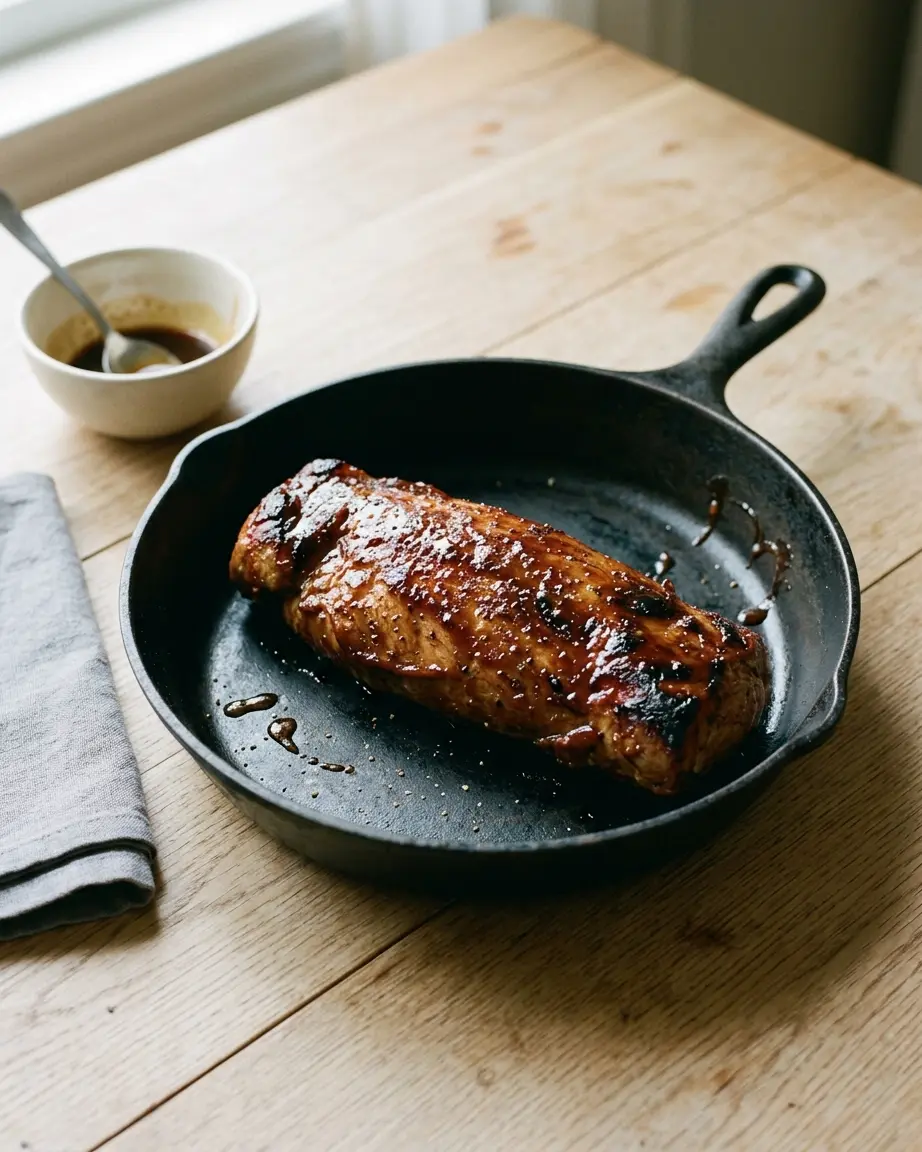
Brush the pork with the remaining teriyaki sauce in the saucepan and transfer the skillet to the 400°F oven. Roast for 8 to 10 minutes, turning once and brushing with more sauce. It's ready when an instant-read thermometer inserted into the thickest part reads 145°F.
- 5
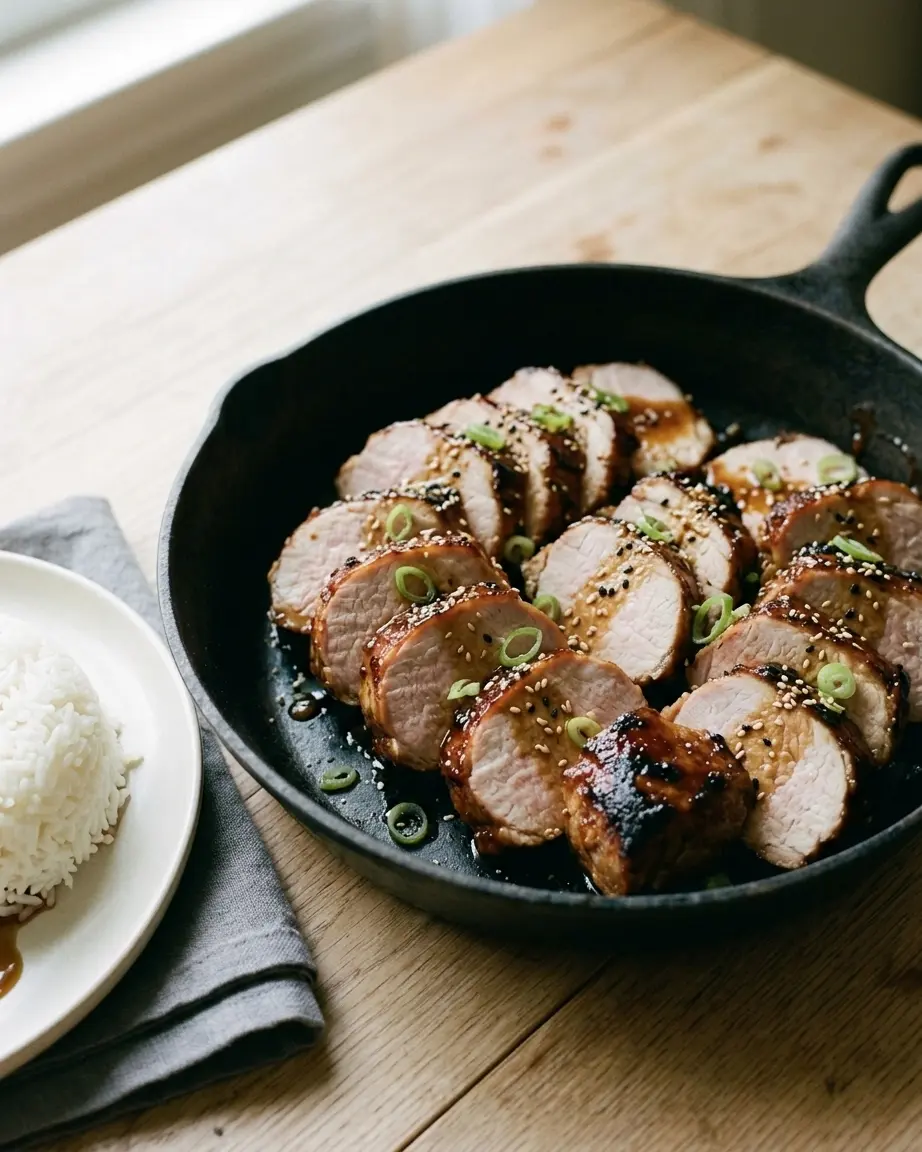
Transfer the pork to a cutting board and rest for 3 minutes. Brush with the reserved clean sauce, then slice crosswise and garnish with sesame seeds and green onions if using. It's ready when the juices have settled and the slices hold their shape.
Used in this recipe: Instant-Read Thermometer Silicone Basting Brush Stainless Steel Saucepan (Amazon, affiliate links)
Notes
Tips for Success
- Keep a portion of the teriyaki sauce separate before it touches the raw pork. That clean sauce can be brushed over the cooked tenderloin at the end, giving the pork a fresh, glossy glaze without cross-contamination.
- Use a thin coating during roasting and reserve most of the clean sauce for the final brushing. If the glaze darkens too quickly, loosely tent the pork with foil while it finishes cooking.
Common Mistakes to Avoid
- The teriyaki glaze can burn or become bitter if it is heavily coated on the pork too early because its sugar browns quickly in a hot oven.
Nutrition (per serving)
280 kcal
Calories
37g
Protein
16g
Carbs
7g
Fat
0g
Fiber
1000mg
Sodium
Teriyaki pork tenderloin comes together with a quick homemade glaze and a short oven finish. The pork gets browned first, then roasted with a light coating of sauce so the sugary glaze can caramelize without burning. A clean portion of the teriyaki glaze is saved for the end, giving the sliced pork a fresh, glossy finish.
Ingredients
- 1 1/2 lb pork tenderloin, trimmed of silver skin and excess fat
- 1/3 cup low-sodium soy sauce
- 1/3 cup pineapple juice
- 3 tbsp packed brown sugar
- 1 tbsp rice vinegar
- 2 tsp fresh ginger, finely grated
- 2 cloves garlic, finely grated or minced
- 2 tsp cornstarch, mixed with 1 tablespoon water
- 1 tbsp canola oil
- 1/4 tsp kosher salt
- 1/4 tsp freshly ground black pepper
- 1 tsp sesame seeds, optional
- 2 green onions, thinly sliced, optional The low-sodium soy sauce keeps the glaze from becoming overly salty as it reduces. The pineapple juice adds sweetness and acidity while giving the sauce its distinctive teriyaki flavor.
How To Make It
- Heat the oven to 400°F. In a small saucepan over medium heat, whisk together the soy sauce, pineapple juice, brown sugar, rice vinegar, ginger, and garlic. Simmer for 4 minutes, until the sugar has dissolved and the mixture smells fragrant.
- Whisk the cornstarch slurry into the saucepan and cook over medium heat for 1 minute, stirring constantly. The sauce is ready when it lightly coats a spoon. Remove about 1/3 cup of the thickened sauce to a clean bowl for the finished pork.
- Pat the pork dry and season it with the salt and pepper. Heat the oil in a 12-inch oven-safe skillet over medium-high heat. Sear the pork for 2 minutes per side, until browned on all sides.
- Brush the pork with the remaining teriyaki sauce in the saucepan. Transfer the skillet to the 400°F oven and roast for 8 to 10 minutes, turning once and brushing with more sauce. Use an instant-read thermometer in the thickest part; the pork is ready at 145°F. The thermometer, rather than the pork’s color, is the reliable doneness check. USDA safe temperature chart
- Transfer the pork to a cutting board and rest for 3 minutes. Brush it with the reserved clean sauce, then slice crosswise. Finish with sesame seeds and green onions if using.
Why the Clean Sauce Makes Teriyaki Pork Tenderloin Better
The most important choice is separating some of the thickened teriyaki sauce before it touches the raw pork. That portion stays clean and can be brushed over the cooked tenderloin at the end. This matters because the final glaze stays glossy and fresh instead of relying on sauce that has been exposed to raw pork. It also lets the pork roast with only a thin coating, which helps control how quickly the brown sugar darkens in the hot oven. The same approach is useful in other glazed pork dishes such as Honey Garlic Pork Tenderloin With A Rich Glaze.
If the Teriyaki Glaze Starts to Burn
Teriyaki sauce contains sugar, so a heavy coating can darken quickly in the oven and turn bitter before the pork reaches its target temperature. Keep the roasting coating thin and save most of the clean sauce for the final brushing. If the glaze darkens too quickly, loosely tent the pork with foil while it finishes cooking.
Substitutions
These are untested alternatives, so expect some changes in flavor:
- Pineapple juice: Orange juice gives the glaze a brighter, more citrus-forward flavor with slightly less tropical sweetness.
- Low-sodium soy sauce: Regular soy sauce makes the glaze saltier and more concentrated; reduce the added kosher salt if desired.
- Rice vinegar: Apple cider vinegar gives the sauce slightly sharper, fruitier acidity.
- Green onions: Cilantro provides a more herbal, fresh finish without the mild onion flavor.
Storage and Make-Ahead
Refrigerate leftovers within 2 hours of cooking in a shallow airtight container for up to 3 days. Reheat to 165°F, adding a splash of water or reserved teriyaki sauce to help keep the pork moist. The teriyaki sauce can be made up to 3 days ahead and refrigerated in an airtight container. Rewarm it gently before glazing. Its storage time starts when the sauce is cooked, not when the pork is assembled.
Serving Ideas
Serve the sliced pork with steamed white rice, roasted broccoli, cucumber salad, or sesame green beans. The rice is especially useful for catching the extra teriyaki glaze. For another pork tenderloin dinner with a different sauce profile, see Pork Tenderloin With Mustard Sauce: Creamy Maple-Dijon.