Easy Moroccan Chicken Tagine
Moroccan chicken tagine with boneless thighs, ras el hanout, preserved lemon, green olives and apricots, simmered in one pot. Ready in 45 minutes.
Prep
20 min
Cook
25 min
Total
45 min
Servings
4-6 servings
Ingredients
Tools that make this easier
Optional — the recipe works without them.
As an Amazon Associate, I earn from qualifying purchases.
Instructions
- 1
Prep Your Ingredients. Prep Your Ingredients: Before you even turn on the stove, ensure all your chicken is cut, onions are sliced, garlic and ginger are minced, and all your spices, apricots, preserved lemon, and olives are measured out and ready to go. This is called mise en place and it makes cooking a breeze.
- 2
Sear the Chicken. Sear the Chicken: Heat the olive oil in a large, heavy-bottomed pot or Dutch oven over medium-high heat. Season the chicken pieces with a pinch of salt and pepper. Once the oil is shimmering, add the chicken in a single layer (you might need to do this in two batches to avoid overcrowding, which steams the chicken instead of searing it). Sear for 2-3 minutes per side until lightly browned. The goal isn't to cook it through, but to develop a flavorful crust. Remove the chicken from the pot and set aside.
- 3
Sauté Aromatics. Sauté Aromatics: Reduce the heat to medium. Add the sliced onions to the pot, scraping up any browned bits from the chicken. Cook, stirring occasionally, for 5-7 minutes until the onions are softened and translucent.
- 4
Add Garlic and Ginger. Add Garlic and Ginger: Stir in the minced garlic and grated ginger. Cook for another 1-2 minutes until fragrant, being careful not to burn the garlic.
- 5
Bloom the Spices. Bloom the Spices: Add the turmeric, cumin, paprika, cinnamon (if using), cayenne pepper, `ras el hanout`, salt, and black pepper to the pot with the onions. Stir constantly for about 1 minute. This "blooming" step toasts the spices, intensifying their flavors and aromas dramatically.
- 6
Deglaze and Simmer. Deglaze and Simmer: Pour in the chicken broth, scraping the bottom of the pot with a wooden spoon to release any browned bits (this is where much of your flavor lives!). Add the canned diced tomatoes (undrained). Bring the mixture to a gentle simmer.
- 7
Return Chicken and Add Apricots. Return Chicken and Add Apricots: Return the seared chicken pieces to the pot, nestling them into the sauce. Add the dried apricots. Stir gently to combine everything.
- 8
Simmer and Cook. Simmer and Cook: Reduce the heat to low, cover the pot, and let your **one-pot Moroccan chicken** simmer for 15-20 minutes, or until the chicken is cooked through and very tender. The sauce should have thickened slightly.
- 9
Finish with Preserved Lemon and Olives. Finish with Preserved Lemon and Olives: Remove the lid. Stir in the chopped preserved lemon and pitted green olives. Cook for another 2-3 minutes to allow these flavors to meld. Taste the sauce and adjust seasoning if necessary. You might want a little more salt or pepper, or a squeeze of fresh lemon juice if you desire more brightness.
- 10
Garnish and Serve. Garnish and Serve: Ladle the **easy Moroccan chicken tagine** into serving bowls. Garnish generously with fresh chopped cilantro and parsley. Serve hot with your preferred side dish.
Used in this recipe: Enameled Dutch Oven Instant-Read Thermometer (Amazon, affiliate links)
Notes
Tips for Success
- Spices: While pre-ground spices are convenient, if you have whole spices and a grinder, grinding them fresh just before cooking will significantly enhance the aroma and flavor.
- Preserved Lemons: You can buy them or even make them at home with lemons, salt, and time. They last for months and are a fantastic addition to many dishes beyond tagine.
- Chicken: Always opt for good quality chicken. Free-range or organic chicken often has better flavor and texture.
- Pre-chopped Ingredients: If you're really pressed for time, consider buying pre-chopped onions or garlic, or using ginger paste. Just be mindful of the quality and freshness.
- Spice Blends: Using a pre-made `ras el hanout` blend saves you the time of measuring out individual spices.
- Chicken: Cutting the chicken thighs into smaller, uniform pieces helps them cook faster and more evenly.
- Don't Rush the Browning: Searing the chicken properly adds a crucial layer of flavor. Don't skip or rush this step.
- Taste as You Go: Moroccan cooking, like many cuisines, benefits from tasting and adjusting. Always taste the sauce before serving and add more salt, pepper, or even a tiny pinch of sugar if you feel it needs balancing.
- Uniformity: Cutting chicken and vegetables into similar sizes ensures they cook evenly.
- Patience with Simmering: While this is a quick recipe, allowing the flavors to meld during the simmer is crucial. Don't crank up the heat to speed it up a gentle simmer is best.
- Tagine often tastes even better the next day as the flavors have more time to meld and deepen.
- Tagine freezes exceptionally well, making it a great meal prep option.
Common Mistakes to Avoid
- Overcrowding the Pot During Searing: When you're browning the chicken, it's tempting to throw it all in at once. However, overcrowding lowers the pan temperature, causing the chicken to steam instead of sear. This results in pale, less flavorful chicken. Cook in batches, giving the chicken enough space to brown nicely.
- Skipping the Spice Blooming Step: Adding the spices directly to the oil and cooking them for a minute before adding liquids (this is called "blooming") is crucial for developing their full flavor and aroma. Skipping this step or adding them too late can lead to a less vibrant, less integrated spice profile. Just be careful not to burn them!
- Not Scrapping the Fond: After searing the chicken and sautéing the onions, you'll notice browned bits sticking to the bottom of your pot. This "fond" is pure flavor! When you add the broth, make sure to scrape it up with a wooden spoon. Leaving it behind means leaving flavor behind.
- Overcooking the Chicken: While chicken thighs are forgiving, even they can become dry and stringy if overcooked excessively. This recipe calls for a relatively quick simmer (15-20 minutes) after searing. Keep an eye on it, and once the chicken is tender and cooked through, it's done. You want juicy chicken, not tough meat.
- Under-Seasoning or Not Adjusting Seasoning: The initial salt and pepper are a start, but flavors can change as they cook and meld. Always taste your tagine before serving and adjust seasoning as needed. You might need a pinch more salt, pepper, or even a touch of acidity (like a squeeze of fresh lemon juice) to brighten the flavors.
- Using Too Much Liquid: While a tagine needs liquid to simmer, too much can result in a watery sauce rather than a rich, flavorful one. Stick to the recommended amount of broth and tomatoes, and allow the sauce to reduce slightly during simmering.
- Forgetting Fresh Herbs: The fresh cilantro and parsley at the end aren't just for garnish they add a critical burst of freshness that balances the rich, cooked flavors of the spices. Don't skip them!
- Not Rinsing Preserved Lemons/Olives: Preserved lemons and some olives can be quite salty. A quick rinse under cold water before chopping and adding helps to mellow their saltiness and prevents your dish from becoming overly seasoned.
- Troubleshooting: Chicken is Tough or Dry: Likely overcooked, or too high heat.
- Troubleshooting: Sauce is Too Thin: Too much liquid, or not enough simmering time for reduction.
- Troubleshooting: Sauce is Too Thick: Too much reduction, or not enough initial liquid.
- Troubleshooting: Flavor is Bland/Lacking Depth: Spices weren't bloomed properly, or needs more seasoning.
- Troubleshooting: Too Salty: Over-salted, especially common with preserved lemons and olives if not rinsed.
- Troubleshooting: Too Sweet (e.g., from apricots): Too many apricots, or need more balance.
- Troubleshooting: Spices Taste Burnt or Bitter: Spices were cooked at too high a heat or for too long during the blooming stage.
Nutrition (per serving)
350-400 kcal
Calories
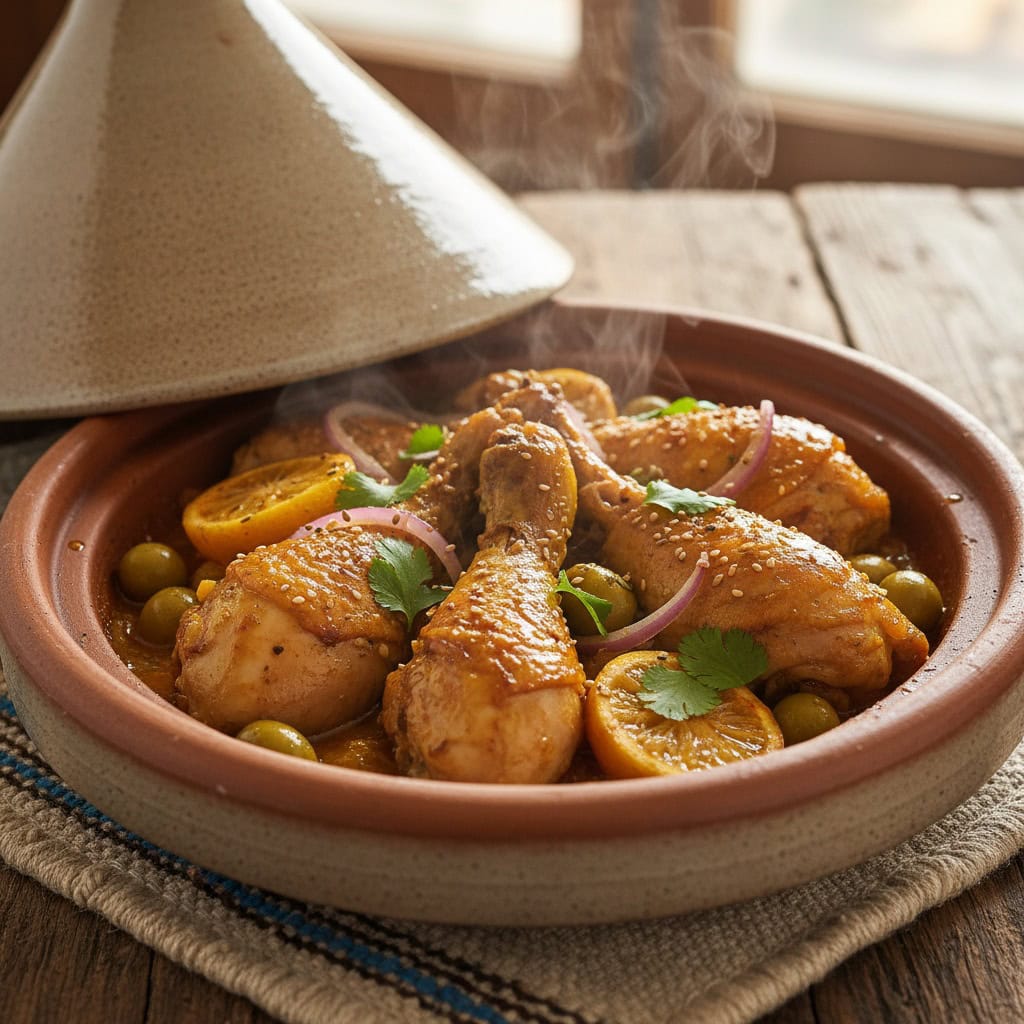
This Moroccan chicken tagine is a one-pot weeknight version of the North African classic: bite-size chicken thighs simmered in a tomato and broth sauce seasoned with ras el hanout, ginger and turmeric, then finished with salty green olives, preserved lemon and sweet dried apricots. Because the chicken is boneless and cut into 1.5-inch pieces, it cooks through in about 25 minutes instead of the hour or more a traditional bone-in tagine needs.
You don’t need a clay tagine. A Dutch oven or any heavy pot with a lid does the same job here, and the whole dish is ready in about 45 minutes including prep.
Table of Contents
Ingredients
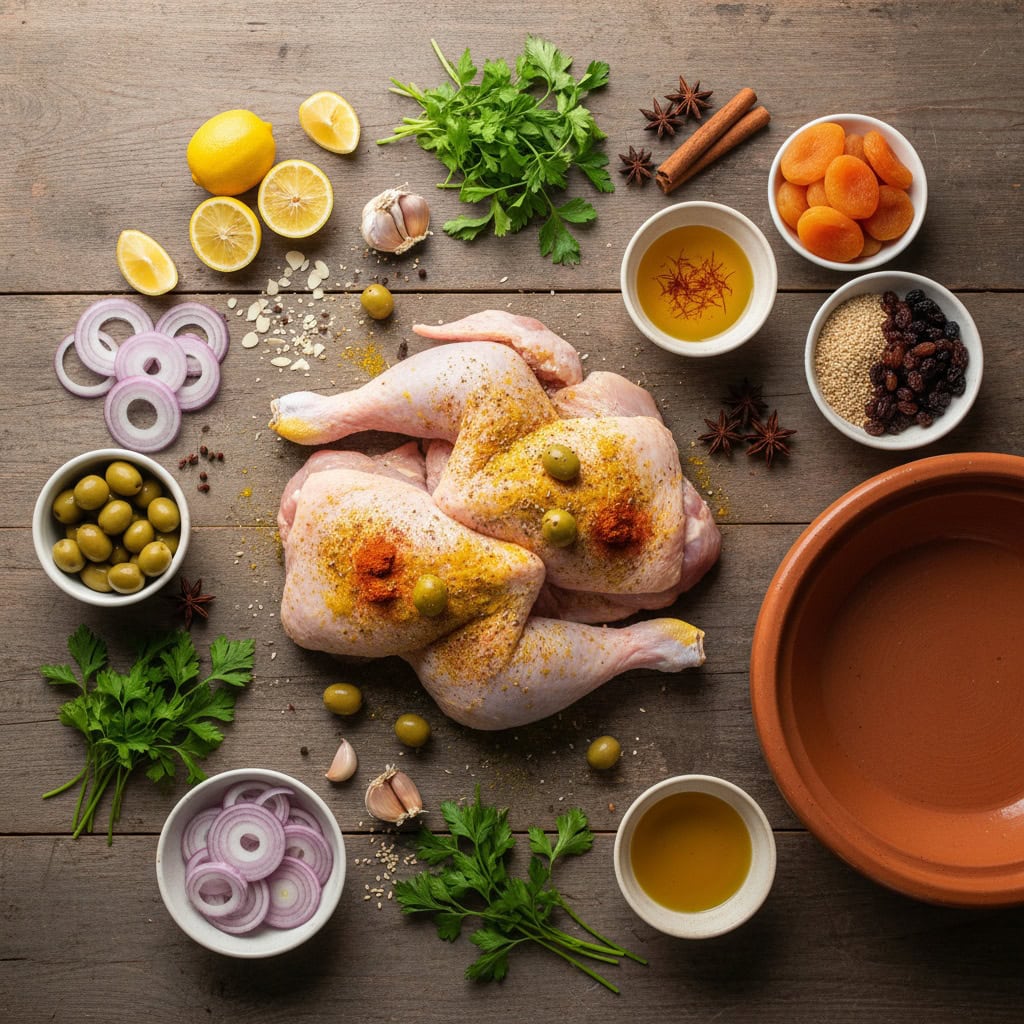
The full quantities are in the recipe card above. A few notes on the ingredients that matter most:
- Chicken thighs: 2 lbs boneless, skinless thighs, cut into 1.5-inch pieces. Thighs stay moist through the simmer; breast works but dries out faster (see the substitutions below).
- Ras el hanout: 1 tablespoon. This Moroccan spice blend (“head of the shop”) varies a lot by brand, so smell yours first. A very floral or rose-heavy blend can be used a little more sparingly.
- The other spices: 1 teaspoon each of turmeric, cumin and sweet paprika, 1/2 teaspoon cinnamon and 1/4 teaspoon cayenne. Measure them into one small bowl before you start, because they go in all at once.
- Aromatics: 1 large yellow onion (thinly sliced), 4–5 garlic cloves (minced) and 1 tablespoon grated fresh ginger.
- Liquid: 2 cups low-sodium chicken broth and one 14.5 oz can of diced tomatoes with their juice. Low-sodium broth matters because the olives and preserved lemon add plenty of salt later.
- Preserved lemon: 1/4 cup, rinsed and finely chopped. It gives a salty, floral tang that fresh lemon can’t fully copy.
- Green olives: 1/2 cup pitted, halved. Castelvetrano or Moroccan green olives are mild; rinse them if they are very briny.
- Dried apricots: 1/2 cup, halved. They plump in the sauce and balance the salt from the olives and lemon.
- Fresh herbs: 1/4 cup each of chopped cilantro and parsley, stirred in at the end.
How to Make Chicken Tagine in One Pot
Have everything chopped and measured before the pot goes on the heat. Once the spices hit the oil, the steps move quickly.
- Season the chicken. Pat the chicken pieces dry with paper towels and toss them with the salt and black pepper. Dry chicken browns; wet chicken steams.
- Brown in batches. Heat 1 tablespoon of the olive oil in a Dutch oven over medium-high heat. Add half the chicken in a single layer and cook for 3–4 minutes, turning once, until browned on the outside. It does not need to be cooked through. Transfer to a plate and repeat with the rest.
- Soften the onion. Lower the heat to medium, add the remaining tablespoon of oil and the sliced onion. Cook for about 5 minutes, stirring, until soft and lightly golden.
- Bloom the spices. Stir in the garlic and ginger for 1 minute, then add the ras el hanout, turmeric, cumin, paprika, cinnamon and cayenne. Stir for 30–60 seconds until fragrant. Keep the heat at medium so the spices toast without scorching.
- Add the liquid. Pour in the diced tomatoes and broth and scrape up the browned bits from the bottom of the pot with a wooden spoon.
- Simmer with the olives, lemon and apricots. Return the chicken and any juices from the plate, then add the apricots, preserved lemon and olives. Bring to a gentle simmer, cover and cook for 10 minutes. Uncover and simmer 5–10 minutes more, until the sauce has thickened slightly and the thickest piece of chicken reads 165°F on an instant-read thermometer.
- Finish and taste. Taste the sauce before adding any more salt. Stir in most of the cilantro and parsley, scatter the rest on top and serve.
Why the Sauce Turns Out Thin, Salty or Flat
Most problems with a quick tagine come from one of four things:
- Watery sauce: the pot was covered for the whole simmer. Leave the lid off for the last 5–10 minutes. If it is still thin, lift out the chicken and boil the sauce hard for a few minutes, then return the chicken.
- Too salty: unrinsed olives or preserved lemon, or full-sodium broth. Add a splash of water or unsalted broth and a few extra chopped apricots, and serve with plain couscous or a spoonful of yogurt to soften it.
- Flat or dusty spice flavor: the spices went straight into the liquid instead of being bloomed in oil first, or the jar is old. A small pinch of fresh ras el hanout cooked in a little oil and stirred in at the end helps.
- Bitter edge: the spices or garlic scorched in step 4. Next time lower the heat before adding them; there is no real fix once it happens.
Tough chicken usually means it boiled hard rather than simmered. Keep the bubbles gentle and check the temperature at the 15-minute mark.
Substitutions and What to Expect
- Chicken breast instead of thighs: cut it into the same 1.5-inch pieces and cut the covered simmer to about 6 minutes. Expect leaner, slightly drier meat; pull it as soon as it reaches 165°F.
- Bone-in thighs or drumsticks: brown them skin-side down and simmer covered for 35–45 minutes until they reach 165°F near the bone. Expect a richer sauce and a total time closer to 75 minutes.
- No preserved lemon: use the finely grated zest of one lemon plus a squeeze of juice at the end. Expect a brighter but thinner citrus note without the salty depth.
- No ras el hanout: mix 1 teaspoon each of ground coriander and ginger with an extra 1/2 teaspoon cumin and a pinch each of allspice and black pepper. Expect a warm but simpler flavor.
- More vegetables: add sliced carrots with the liquid, or a can of drained chickpeas with the olives. Chickpeas also stretch the pot toward 6 servings.
What to Serve With Moroccan Chicken Tagine
Plain couscous is the traditional partner because it soaks up the sauce; crusty bread or basmati rice work the same way. A crisp, lemony salad balances the richness, and a spoonful of harissa on the side suits anyone who wants more heat. If you like these flavors, the Greek lemon chicken thighs use a similar lemon-and-herb approach, and this baked apricot chicken is a hands-off, oven-baked take on the chicken and apricot pairing.
Storing and Reheating Leftovers
Tagine often tastes better the next day because the spices keep settling into the sauce, which also makes it a good make-ahead dish.
- Fridge: refrigerate within 2 hours of cooking in an airtight container, with the chicken covered by sauce. Eat within 3–4 days.
- Freezer: freeze cooled portions for up to 3 months. Thaw overnight in the fridge. Add the fresh herbs after reheating rather than before freezing.
- Reheating: warm gently on the stove over medium-low heat with a splash of broth or water, stirring now and then, until the chicken reaches 165°F. The USDA’s leftovers guidance covers cooling and reheating in more detail.
FAQ
Can I make this chicken tagine in a slow cooker?
Yes. Do steps 1–5 on the stove so the chicken browns and the spices bloom, then move everything, including the apricots, preserved lemon and olives, to the slow cooker. Cook on low for 3–4 hours, until the chicken reaches 165°F. Boneless thighs turn stringy if left much longer. Leave the lid off for the last 20–30 minutes if the sauce needs thickening.
Do I need a tagine pot?
No. A clay tagine’s cone-shaped lid returns steam to the food during long, slow cooking. For this quick stovetop version, a Dutch oven or heavy lidded pot works the same.
Where can I buy preserved lemons?
Look in Middle Eastern or international grocers, or the olive and pickle aisle of larger supermarkets. After opening, keep the jar in the fridge with the lemons covered by their brine. You only need the rind for this recipe: scrape away the pulp, rinse and chop.
How can I make it less sweet?
Cut the apricots to 1/4 cup, or chop them small so they melt into the sauce instead of staying as sweet bites. A squeeze of lemon juice at the end also balances the sweetness.
For a heartier chicken stew with a Caribbean profile, try this Belizean chicken stew next.