Easy South African Pap Wors Chakalaka Recipe
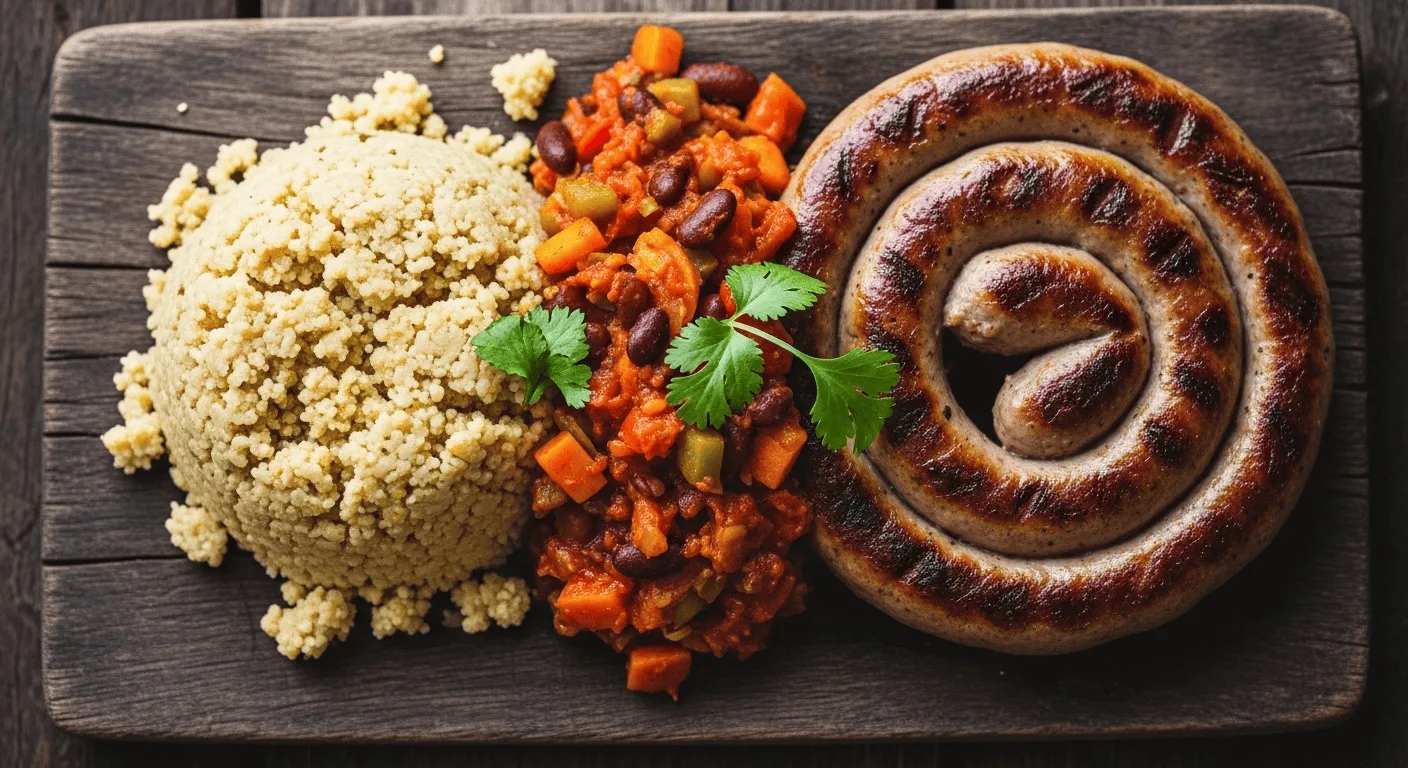
South African pap wors chakalaka: soft maize-meal pap, boerewors cooked to 160F and a spicy baked-bean chakalaka relish. Ready in 50 minutes, serves 4.
Prep
15 min
Cook
35 min
Total
50 min
Servings
4 servings
Ingredients
Tools that make this easier
Optional — the recipe works without them.
As an Amazon Associate, I earn from qualifying purchases.
- Most useful here Stainless Steel Stockpot Boils the water and simmers the pap under its lid. Check price on Amazon
- Cast-Iron Skillet Cooks the boerewors coils while you turn them until browned. Check price on Amazon
- Instant-Read Thermometer Checks the boerewors is cooked through before resting. Check price on Amazon
Instructions
- 1
In a large, heavy-bottomed pot, bring 4 cups of water and 1 tsp of salt to a rolling boil over high heat.
- 2
Slowly pour in the maize meal, stirring constantly with a wooden spoon or whisk to prevent lumps. Reduce the heat to low.
- 3
Continue stirring for a few minutes until the mixture thickens into a thick paste.
- 4
Cover the pot tightly and let it simmer on very low heat for 20-25 minutes.
- 5
Remove from heat and use a fork to fluff the pap vigorously. Keep warm while finishing other components.
- 6
Heat 1 tbsp olive oil (if using a pan) in a large frying pan over medium heat, or preheat your braai (grill) to medium-high.
- 7
Place the boerewors coils in the hot pan or on the grill. Cook for 15-20 minutes, turning occasionally, until nicely browned and cooked through.
- 8
Remove the wors from heat and let it rest for 5 minutes before slicing into individual portions.
- 9
In a separate medium-sized pot or deep pan, heat 1 tbsp olive oil over medium heat. Add chopped onion and cook until softened, about 5 minutes.
- 10
Stir in minced garlic and grated ginger, cooking for another minute until fragrant.
- 11
Add diced green and red bell peppers and grated carrots. Cook for 5-7 minutes until they start to soften.
- 12
Stir in chopped chillies (if using fresh), curry powder, smoked paprika (if using), and turmeric powder. Cook for 1 minute.
- 13
Pour in canned chopped tomatoes (undrained) and canned baked beans. Stir well to combine.
- 14
Add ½ cup vegetable broth or water. Bring to a gentle simmer, then reduce heat to low, cover, and cook for 10-15 minutes.
- 15
Season with salt and black pepper to taste.
- 16
Stir in fresh chopped coriander just before serving.
- 17
Spoon generous portions of fluffy pap onto plates.
- 18
Nestle slices of cooked boerewors alongside the pap.
- 19
Ladle a hearty serving of chakalaka relish over the top or beside.
- 20
Garnish with extra fresh coriander, if desired.
Used in this recipe: Stainless Steel Stockpot Cast-Iron Skillet Instant-Read Thermometer (Amazon, affiliate links)
Notes
Tips for Success
- Bursting with flavor, culture, and comfort
- Perfect for braais (South African barbecues)
- Vibrant, spicy vegetable relish
- Fluffy, grainy pap texture
Common Mistakes to Avoid
- Pap can become lumpy if not stirred properly
- Boerewors can dry out if overcooked
- Chakalaka can be too spicy if chilies aren't adjusted
- Requires multi-tasking to coordinate all components
Nutrition (per serving)
600-800 kcal
Calories
This is a truly iconic South African dish that’s bursting with flavor, culture, and comfort: South African Pap Wors Chakalaka. This isn’t just a meal; it’s a celebration, a staple at any braai (South African barbecue), and a dish that tells a story of community and vibrant tastes. If you’ve ever wanted to bring a piece of South Africa to your kitchen, this authentic recipe for chakalaka pap with juicy boerewors sausage is your perfect starting point. You cook soft maize-meal pap alongside a spicy, tangy vegetable relish, and all three parts come together in under an hour.
Table of Contents
Ingredients
Making authentic South African Pap Wors Chakalaka starts with quality ingredients. Here’s what you’ll need to create this flavor-packed feast. If you can’t find everything exactly as listed, the notes below include swaps and what to expect from them.
For the Pap (Maize Meal Porridge):
- 2 cups Coarse Maize Meal (Mielie Meal / Polenta): This is the heart of your pap. Coarse maize meal gives you that traditional fluffy, grainy texture. If you can only find fine maize meal, it will work, but the texture will be smoother, more like a thick porridge.
- 4-5 cups Water: The exact amount depends on how thick you like your pap. Start with 4 and add more if needed for a looser consistency.
- 1 tsp Salt: Essential for seasoning the pap.
For the Wors (Boerewors Sausage):
- 1.5 lbs (approx. 700g) Boerewors Sausage: This is a traditional South African coiled sausage, usually a mix of beef and pork, spiced with coriander. If you can’t find boerewors, a good quality beef or pork sausage with a robust flavor (like a farmer’s sausage) can be a suitable substitute. Just ensure it’s not overly sweet or herb-focused, as boerewors has a distinct spice profile.
- 1 tbsp Olive Oil (optional): For cooking the wors if not grilling.
For the Chakalaka (Spicy Vegetable Relish):
- 1 tbsp Olive Oil: For sautéing vegetables.
- 1 large Onion, chopped: The aromatic base for our chakalaka.
- 2 cloves Garlic, minced: Adds depth and warmth.
- 1-2 tsp Fresh Ginger, grated: For a zingy, vibrant kick.
- 1 Green Bell Pepper, diced: Adds sweetness and crunch.
- 1 Red Bell Pepper, diced: For color and mild sweetness.
- 1-2 Carrots, grated: Adds natural sweetness and texture.
- 1 (14.5 oz / 400g) can Chopped Tomatoes: The juicy base of the relish. Don’t drain!
- 1 (15 oz / 425g) can Baked Beans in Tomato Sauce: This might sound unusual, but it’s a classic and crucial ingredient in South African chakalaka, adding creaminess and a touch of sweetness.
- 1-2 Fresh Chillies, deseeded and finely chopped (or 1 tsp Chilli Powder): Adjust to your spice preference. Deseed for less heat.
- 1 tsp Curry Powder (mild or medium): For that classic chakalaka flavor profile.
- ½ tsp Smoked Paprika (optional): Adds a lovely smoky depth.
- ½ tsp Turmeric Powder: For color and earthy notes.
- ½ cup Vegetable Broth (or water): To loosen the sauce if needed.
- Salt and Black Pepper to taste: Essential seasoning.
- Fresh Coriander (Cilantro), chopped: For garnish and fresh flavor.
How Long Pap, Wors and Chakalaka Take
Getting your timing right is key to a perfectly coordinated South African Pap Wors Chakalaka meal. Here’s a breakdown to help you plan:
- Prep time: 15 minutes
- Chopping vegetables for chakalaka.
- Measuring out ingredients.
- Cook time: about 35 minutes
- Pap: 20-25 minutes active cooking, plus resting.
- Wors: 15-20 minutes (can cook simultaneously with chakalaka).
- Chakalaka: 20-25 minutes.
- Total time: about 50 minutes
Time-Saving Tips:
- Pre-chop: Chop your onions, garlic, ginger, and bell peppers ahead of time. You can even grate the carrots the day before.
- Multi-tasking: Start the pap, then immediately begin sautéing ingredients for the chakalaka while the pap cooks. Cook the boerewors on a separate grill or pan simultaneously. This is the secret to getting everything ready at once!
- Canned convenience: Using canned chopped tomatoes and baked beans saves a ton of time. Embrace it!
- Frozen vegetables: If you’re really short on time, a frozen mix of diced onions and peppers can work for the chakalaka, though fresh is always best for flavor.
How to Cook Pap, Wors and Chakalaka Together
Let’s get cooking! Follow these simple steps to create a show-stopping South African Pap Wors Chakalaka that will impress everyone at your table.
Step 1: Get Your Pap Cooking (The Base)
- Bring water to a boil: In a large, heavy-bottomed pot, bring 4 cups of water and 1 tsp of salt to a rolling boil over high heat.
- Add maize meal: Once boiling, slowly pour in the maize meal, stirring constantly with a wooden spoon or whisk to prevent lumps. Reduce the heat to low.
- Simmer and stir: Continue stirring for a few minutes until the mixture thickens into a thick paste. The key to good pap is patience and stirring!
- Cover and cook: Once thickened, cover the pot tightly and let it simmer on very low heat for 20-25 minutes. Resist the urge to lift the lid too often. The steam trapped inside is crucial for cooking the pap thoroughly and achieving that fluffy texture.
- Fluff and serve: After 20-25 minutes, remove from heat. Use a fork to fluff the pap vigorously. If it’s too dry, you can add a splash of hot water or milk, and if it’s too wet, cook uncovered for a few more minutes. Keep it warm while you finish the other components.
Step 2: Sizzle Your Wors (The Protein)
- Heat pan or grill: Heat 1 tbsp olive oil (if using a pan) in a large frying pan over medium heat, or preheat your braai (grill) to medium-high.
- Cook the wors: Place the boerewors coils in the hot pan or on the grill. Cook for 15-20 minutes, turning occasionally, until nicely browned all over and cooked through. The internal temperature should reach 160°F (71°C).
- Rest and slice: Once cooked, remove the wors from the heat and let it rest for 5 minutes before slicing into individual portions. This keeps the sausages juicy!
Step 3: Craft Your Chakalaka (The Flavor Bomb)
- Sauté aromatics: In a separate medium-sized pot or deep pan, heat 1 tbsp olive oil over medium heat. Add the chopped onion and cook until softened and translucent, about 5 minutes.
- Add garlic and ginger: Stir in the minced garlic and grated ginger, cooking for another minute until fragrant. Don’t let the garlic burn!
- Introduce bell peppers and carrots: Add the diced green and red bell peppers and grated carrots. Cook for 5-7 minutes, stirring occasionally, until they start to soften.
- Spice it up: Stir in the chopped chillies (if using fresh), curry powder, smoked paprika (if using), and turmeric powder. Cook for 1 minute, letting the spices bloom and become fragrant.
- Add canned goods: Pour in the canned chopped tomatoes (undrained) and the canned baked beans. Stir well to combine all the ingredients.
- Simmer: Add ½ cup of vegetable broth or water. Bring the mixture to a gentle simmer, then reduce the heat to low, cover, and cook for 10-15 minutes. This allows the flavors to meld beautifully and the vegetables to become tender.
- Season: Season the chakalaka relish with salt and black pepper to taste. Adjust spices as needed.
- Garnish: Stir in fresh chopped coriander just before serving.
Step 4: Assemble and Serve
- Spoon generous portions of the fluffy pap onto plates.
- Nestle slices of the perfectly cooked boerewors alongside the pap.
- Ladle a hearty serving of the vibrant chakalaka relish over the top or beside.
- Garnish with extra fresh coriander, if desired.
Lighter Swaps for Wors, Pap and Chakalaka
Enjoying South African Pap Wors Chakalaka doesn’t mean you have to compromise on health! Here are some simple ways to lighten up this hearty meal without losing an ounce of its fantastic flavor.
- Leaner Wors: Traditional boerewors can be quite rich. Look for lower-fat versions of boerewors, or substitute with a lean chicken or turkey sausage, cooked to 165°F. Expect a milder sausage without the coriander punch of boerewors, so add a pinch of ground coriander to the chakalaka.
- More Veggies in Chakalaka: Amp up the vegetable content even further! Add finely chopped cabbage, spinach, zucchini, or even mushrooms to your chakalaka relish. This boosts fiber and nutrients while adding volume.
- Reduced Sodium: Opt for low-sodium canned tomatoes and baked beans. You can also significantly reduce the salt added to the pap; the chakalaka and wors will provide plenty of seasoning.
- Whole Grain Pap: While traditional pap uses refined maize meal, you can experiment with whole grain maize meal for increased fiber. Expect a denser, nuttier pap that may need an extra splash of water.
- Oil Reduction: Sauté your chakalaka vegetables in a little water or vegetable broth instead of oil, or use an olive oil spray to minimize fat. Grilling the wors also reduces the need for extra oil.
- Spice it Up Naturally: Instead of relying on too much salt, use more fresh herbs like parsley and thyme, and plenty of spices like cumin, coriander, and additional chili to enhance flavor naturally.
How to Serve Pap Wors Chakalaka
Once you’ve mastered the South African Pap Wors Chakalaka, you’ll want to serve it up right! This dish is incredibly versatile and makes a fantastic meal for family dinners, gatherings, or a truly special braai.
- The Classic Way: Serve generous portions of pap, a few slices of boerewors, and a large helping of chakalaka on each plate. A sprinkle of fresh coriander is a must for garnish and freshness.
- Braai Buddy: Pap and chakalaka are absolute essentials at any South African braai. Serve them alongside other grilled meats like South African chicken burgers or lamb chops, with campfire bread on a stick cooked over the same coals.
- Sides that Shine: While the dish is complete on its own, a simple green salad or a cold braai pasta salad can provide a refreshing contrast. A side of creamy avocado slices also pairs wonderfully, adding a cool element to balance the spice.
- Make it a Bowl: For a more casual presentation, serve everything in a large bowl, almost like a hearty stew. This makes it perfect for a cozy night in.
- Drinks: Pair this robust meal with a crisp lager, a South African Chenin Blanc, or a refreshing glass of homemade iced rooibos tea.
Why Pap Turns Lumpy and Wors Turns Dry
Even the most seasoned home cooks can make a few missteps when trying a new recipe. Here are some common mistakes to watch out for when making your South African Pap Wors Chakalaka to ensure perfect results every time.
- Lumpy Pap: The biggest culprit here is adding the maize meal too quickly to boiling water without stirring vigorously. Always pour slowly and stir constantly until it thickens. Another mistake is not stirring enough during the initial thickening phase.
- Undercooked Pap: Rushing the simmering process will leave your pap with a raw, gritty taste. Ensure it simmers on low heat, covered, for at least 20-25 minutes. Patience is key for perfectly fluffy pap.
- Overcooked Wors: While boerewors needs to be cooked through, overcooking it will make it dry and tough. Cook it over medium heat until it reaches 160°F in the thickest part, then let it rest before slicing to keep it juicy.
- Bland Chakalaka: Don’t skimp on the spices or the sautéing time for the aromatics (onion, garlic, ginger). These build the foundational flavors of your chakalaka. Taste and adjust seasoning (salt, pepper, and chili) before serving.
- Dry Chakalaka: The relish should be saucy, not dry. If it looks too thick while simmering, add a little more vegetable broth or water until it reaches your desired consistency.
- Not Resting the Wors: Like any meat, boerewors benefits greatly from a 5-minute rest after cooking. This allows the juices to redistribute, resulting in a more tender and flavorful sausage.
- Ignoring Spice Levels: Remember to adjust the fresh chillies or chili powder in your chakalaka to your family’s preference. You can always add more heat at the table, but it’s harder to remove it!
- Lack of Freshness: Don’t forget the fresh coriander at the end! It adds a burst of freshness and aroma that brightens up the entire dish and ties all the robust flavors together.
Storing, Freezing and Reheating Each Component
Leftovers of South African Pap Wors Chakalaka are just as delicious, if not more so, the next day! Proper storage ensures they stay fresh and tasty.
- Separate Storage: It’s best to store the pap, wors, and chakalaka separately in airtight containers. This helps maintain the best texture for each component.
- Pap: Refrigerate within 2 hours in an airtight container and eat within 3-4 days. It will firm up considerably when cold.
- Wors: Once cooled, store cooked boerewors in an airtight container in the refrigerator for 3-4 days.
- Chakalaka: This relish tends to get even better after a day or two! Store in an airtight container in the refrigerator for 3-4 days.
- Freezing:
- Chakalaka: Chakalaka freezes beautifully. Allow it to cool completely, then transfer to freezer-safe containers or bags. It can be frozen for up to 3 months. Thaw overnight in the refrigerator before reheating.
- Cooked Wors: Cooked boerewors can also be frozen for up to 2-3 months. Wrap individual portions tightly in plastic wrap, then place in a freezer bag. Thaw in the refrigerator.
- Pap: Freezing pap is possible, but its texture might change slightly, becoming a bit gummier after thawing. If you choose to freeze, ensure it’s in an airtight container.
- Reheating: Reheat every component to 165°F, until steaming hot throughout.
- Pap: Reheat pap gently on the stovetop with a splash of water or milk, stirring until softened, or microwave in short bursts, stirring often.
- Wors: Reheat wors in a pan over medium heat until warmed through, or in the oven at 350°F (175°C) for about 10-15 minutes.
- Chakalaka: Reheat chakalaka in a pot over medium heat, stirring occasionally, until hot. You might need to add a splash of water or broth to loosen it up.
Fixing Stiff Pap and Too-Spicy Chakalaka
Sometimes, cooking doesn’t go exactly as planned, especially when trying a new South African Pap Wors Chakalaka recipe. Here are some common problems you might encounter and how to fix them!
- Pap is Lumpy: If your pap is already lumpy, you can try to break up the lumps by vigorously whisking it while it’s still hot. If it’s too far gone, don’t despair! A lumpy pap is still edible, just not as traditionally smooth or fluffy. Next time, remember to add maize meal slowly and stir continuously.
- Pap is Too Dry/Stiff: This usually means not enough water or too much cooking. When reheating, add a tablespoon or two of hot water or milk and stir until it reaches your desired consistency. You can also cover it again and let it steam on very low heat for a few minutes.
- Pap is Too Wet/Runny: This indicates too much water. To fix, cook uncovered over low heat, stirring occasionally, until the excess moisture evaporates and it thickens to your liking.
- Chakalaka is Too Spicy: If you’ve gone a bit overboard with the chillies, you can try to add a dollop of plain yogurt or sour cream to your individual serving to cool it down. You can also stir in a can of plain diced tomatoes or an extra can of baked beans to dilute the heat in the whole batch. A squeeze of lime or lemon juice can also help cut through the heat.
- Chakalaka is Bland: If your chakalaka lacks punch, taste and adjust! Add more salt, pepper, a pinch more curry powder, or even a dash of hot sauce if you like. A squeeze of fresh lemon or lime juice at the end can also brighten flavors.
- Wors is Dry: If your boerewors turned out dry, it was likely overcooked. Ensure you don’t cook it on too high heat for too long. If it’s already dry, serving it with plenty of moist chakalaka will help!
- Ingredients Sticking to the Pot: For the pap, a heavy-bottomed pot and consistent stirring are key. For the chakalaka, ensure you have enough oil and don’t let it cook too dry without enough liquid. Add a splash of broth or water if it starts to stick.
Estimated Nutrition per Serving
Understanding the nutritional breakdown of your South African Pap Wors Chakalaka can help you make informed dietary choices. Please note that these values are estimates and can vary based on specific ingredient brands, cooking methods (e.g., grilling vs. frying wors), and portion sizes.
- Calories: Approximately 600-800 kcal
- Protein: Approximately 25-35g
- Carbohydrates: Approximately 60-80g (including dietary fiber)
- Fat: Approximately 25-45g (with saturated fat varying based on boerewors fat content)
- Fiber: Approximately 8-12g
- Key Nutrients:
- Vitamins: Vitamin A (from carrots), Vitamin C (from peppers, tomatoes), B Vitamins (from maize meal, wors).
- Minerals: Iron (from wors), Potassium, Magnesium, Phosphorus.
Note: These estimates are based on a generous serving size including pap, boerewors, and chakalaka. For precise nutritional information, it is recommended to use an online nutritional calculator with your exact ingredients and measurements.
FAQ
What is pap, and is it gluten-free?
Pap is a traditional South African porridge made from maize meal (cornmeal). While maize is naturally gluten-free, always check the packaging of your specific maize meal brand to ensure it hasn’t been processed in a facility with gluten-containing grains, especially if you have a severe gluten allergy.
What makes boerewors different from other sausages?
Boerewors, meaning “farmer’s sausage” in Afrikaans, is a fresh South African sausage known for its distinct spiraled shape and unique spice blend, primarily coriander, along with nutmeg, allspice, and cloves. It’s usually made from a mix of beef and pork (or sometimes only beef) and has a higher meat content than many other sausages.
Can I make chakalaka less spicy?
Absolutely! To reduce the heat, simply deseed your fresh chillies before chopping, or use fewer chillies. If using chili powder, start with a smaller amount (e.g., ¼ teaspoon) and taste before adding more. You can also use a mild curry powder instead of a hot one.
What if I can’t find maize meal for the pap?
If coarse maize meal is unavailable, you can use regular polenta. The texture might be slightly different – polenta tends to be a bit finer and creamier – but it will still provide a delicious base for your South African Pap Wors Chakalaka.
Can I prepare parts of this dish ahead of time?
Yes! Chakalaka is fantastic when made a day or two in advance, as the flavors have more time to meld. You can chop all your vegetables for the chakalaka ahead of time. The pap is best made fresh, but leftovers store well. The boerewors is also best cooked fresh, but you can definitely get it prepped and ready to hit the grill or pan.
Conclusion
There you have it: a complete guide to making South African Pap Wors Chakalaka right in your own kitchen! This dish is more than just food; it’s an experience, a taste of South African heritage that’s warm, comforting, and undeniably delicious. From the fluffy pap to the spicy, vibrant chakalaka and the savory boerewors, every component plays a vital role in this harmonious meal.
Whether it’s for a cozy family dinner or a lively braai with friends, this recipe is sure to be a hit. Don’t be shy about making it your own by adjusting the spice levels or adding your favorite vegetables to the chakalaka.
Give this South African Pap Wors Chakalaka a try and share your experience. Did you make any fun substitutions? What was your favorite part? We’d love to hear from you! Leave a comment below, or better yet, take a picture of your creation and tag us on social media! For a printable version, jump to the recipe card at the top of this page.