Crispy Loaded Baked Potatoes: The Ultimate Comfort Food
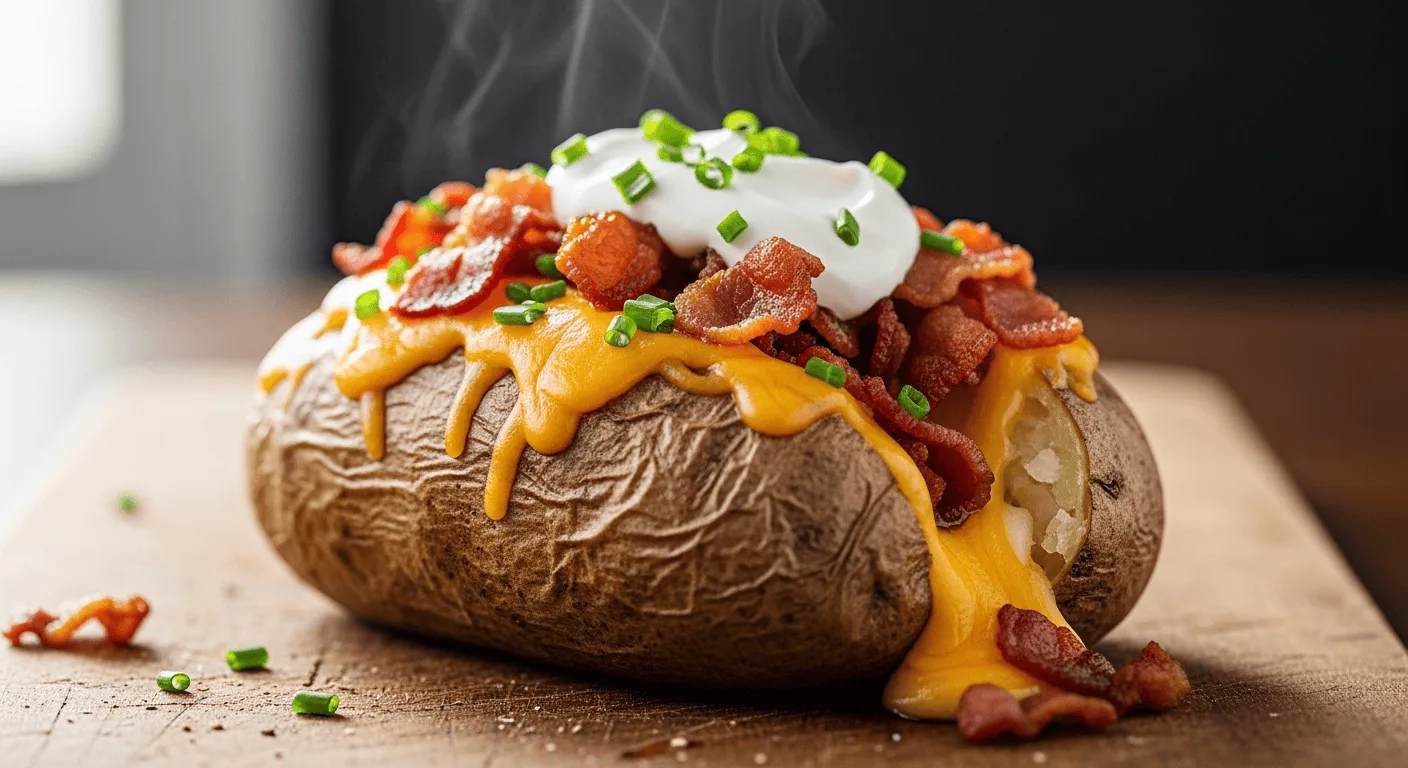
Crispy loaded baked potatoes: oven-baked Russets with a salted, crackly skin, stuffed with creamy bacon-cheddar filling. About 75 minutes, serves 4.
Prep
15 min
Cook
60 min
Total
75 min
Servings
4 servings
Ingredients
Tools that make this easier
Optional — the recipe works without them.
As an Amazon Associate, I earn from qualifying purchases.
Instructions
- 1
Preheat oven to 400°F (200°C). Scrub potatoes under cold water and pat completely dry.
- 2
Prick each potato all over with a fork 6-8 times to allow steam to escape.
- 3
Drizzle olive oil over each potato and rub evenly over entire skin.
- 4
Sprinkle generously with sea salt, ensuring salt adheres to oiled skin.
- 5
Place potatoes directly on oven rack and bake for 45-60 minutes until skin is golden brown and crispy, and interior is fork-tender.
- 6
While potatoes bake, cook bacon in cold skillet over medium heat until crispy.
- 7
Drain bacon on paper towels, then crumble into small pieces.
- 8
Shred cheese and chop chives if not already prepared.
- 9
Remove potatoes from oven and slice lengthwise three-quarters of the way through.
- 10
Scoop out potato flesh into bowl, leaving 1/4-inch border inside skin.
- 11
Add butter, sour cream, milk, and half the cheese to potato flesh. Season with black pepper and mash until smooth.
- 12
Spoon mixture back into potato skins, mounding slightly.
- 13
Top with remaining cheese and crumbled bacon.
- 14
Return potatoes to oven for 5-10 minutes until cheese is melted and bubbly.
- 15
Garnish with fresh chives and serve immediately.
Used in this recipe: Cast-Iron Skillet Box Grater (Amazon, affiliate links)
Notes
Tips for Success
- Golden, crackly crispy skin
- Fluffy, creamy potato interior
- Versatile – can be main dish or side
- Restaurant-quality results at home
Common Mistakes to Avoid
- Skin can become soggy if not dried properly
- Can explode if not pricked with fork
- Pre-shredded cheese doesn't melt as well
- Long cooking time compared to microwave method
Nutrition (per serving)
550-650 kcal
Calories
Crispy loaded baked potatoes come down to two things: a dry, oiled, well-salted skin baked directly on the oven rack, and a fluffy Russet interior mashed with butter, sour cream and cheddar before it goes back into the shell. This recipe walks through both, then finishes the potatoes with crumbled bacon and a quick melt in the oven, turning a humble spud into a filling side or a main dish.
Table of Contents
This easy recipe will guide you through achieving that coveted golden-brown, crispy loaded baked potatoes skin while ensuring the inside is light, airy, and ready to be loaded with your favorite fixings. The steps below are written to avoid the two usual problems, soggy skins and dry interiors, so the result works as a cozy weeknight meal or a side dish for a crowd.
Ingredients
To craft the perfect crispy loaded baked potatoes, the quality of your ingredients really matters. Here’s what you’ll need:
- 4 large Russet potatoes (about 8-10 ounces each): Russets are key here! Their high starch content makes them ideal for a fluffy interior and crisp exterior. Look for firm, unblemished potatoes.
- 2 tablespoons olive oil (or avocado oil): Essential for that super crispy skin.
- 1 teaspoon sea salt (or kosher salt): To season the skin and help draw out moisture, enhancing crispiness.
- 4 slices thick-cut bacon: Crispy bacon bits are a non-negotiable for bacon cheddar potatoes.
- 1 cup shredded sharp cheddar cheese: Freshly shredded melts better and tastes richer than pre-shredded.
- 1/2 cup sour cream: For that classic creamy, tangy topping.
- 1/4 cup milk (whole milk or half-and-half recommended): To loosen the mashed potato interior for a smoother texture.
- 2 tablespoons unsalted butter: Adds richness to the potato flesh.
- 1/4 cup chopped fresh chives or green onions: For a fresh, oniony bite and vibrant color.
- Freshly ground black pepper, to taste: A simple seasoning that makes a big difference.
Ingredient Notes & Substitutions:
- Potatoes: While Russets are highly recommended, Yukon Golds can work in a pinch; expect a creamier, slightly less fluffy result and a thinner skin. Sweet potatoes give a sweeter flavor, and their skin softens rather than crisps.
- Oil: Any high-smoke point oil will do, but olive oil adds a nice subtle flavor.
- Bacon: Turkey bacon can be used for a leaner option, or you can omit it entirely for a vegetarian version. For an extra kick, consider adding some crumbled chorizo!
- Cheese: Gruyere, Monterey Jack, or smoked gouda can replace the cheddar; Jack melts softer and milder, gouda adds a smoky note.
- Dairy: Greek yogurt can be a tangier, protein-rich substitute for sour cream. Feel free to use plant-based milk and butter for a dairy-free option.
- Chives/Green Onions: Fresh parsley or a sprinkle of dried dill can also brighten up the flavor.
Timing
Getting your timing right is crucial for perfect crispy loaded baked potatoes. Here’s a breakdown:
- Prep time: 15 minutes (Includes washing potatoes, pricking, oiling, salting, and preparing bacon.)
- Cook time: about 60 minutes (smaller potatoes may be tender after 45 minutes)
- Total time: about 75 minutes
Time-Saving Tips:
- Pre-cook bacon: Cook the bacon in advance and store it in an airtight container. When ready to use, simply reheat or crumble directly onto the hot potatoes.
- Multi-tasking: While the potatoes are baking, use that time to shred your cheese, chop your chives, and get all your other toppings ready.
- Batch cooking: If you’re feeding a crowd, you can bake extra potatoes. They store well and can be quickly reheated (see storing tips below).
- Microwave assist (with caution!): For super quick soft insides, you can microwave potatoes for 5-7 minutes before moving them to the oven. However, this often compromises the ultimate crispiness of the skin. For truly crispy loaded baked potatoes, oven-only is the best baked potatoes method.
Step-by-Step Instructions
Follow these steps in order; the bacon and toppings get prepared while the potatoes bake.
Preheat Oven & Prep Potatoes: Preheat your oven to 400°F (200°C). Thoroughly scrub the Russet potatoes under cold running water to remove any dirt. Pat them completely dry with a clean kitchen towel. This step is vital for crispy skin! Use a fork to prick each potato all over, about 6-8 times. This allows steam to escape, preventing explosions and ensuring even cooking.
Oil & Salt for Crispiness: Drizzle the olive oil over each potato, then rub it evenly over the entire skin. Sprinkle generously with sea salt, ensuring the salt adheres to the oiled skin. The oil conducts heat into the skin and the salt pulls out surface moisture, which is what makes it crisp.
Bake the Potatoes: Place the oiled and salted potatoes directly on the oven rack. Bake for 45-60 minutes, or until the skin is deeply golden brown, very crispy to the touch, and the interior is fork-tender. A good test is to squeeze the potato gently (using oven mitts!) – it should yield easily. Larger potatoes will take longer.
Cook the Bacon: While the potatoes are baking, cook your bacon. Place the bacon slices in a cold skillet and cook over medium heat until crispy. Remove the bacon, place on a paper towel-lined plate to drain excess grease, then crumble it into small pieces. Reserve a tablespoon or two of bacon fat if desired for adding extra flavor to the potato flesh.
Prepare the Potato Flesh: Once the potatoes are done, carefully remove them from the oven. Using a sharp knife, slice each potato lengthwise, about three-quarters of the way through, without cutting all the way to the bottom. Gently squeeze the ends of the potato to open it up.
Fluff and Load: Use a fork to carefully scoop out the hot, fluffy potato flesh into a medium bowl, leaving about a 1/4-inch border of potato inside the skin to maintain its structure. Add the butter, sour cream, milk, and about half of the shredded cheddar cheese to the scooped-out potato flesh. Season with black pepper. Mash everything together until smooth and creamy. Taste and adjust seasoning if needed.
Stuff and Top: Spoon the creamy potato mixture back into the crispy potato skins, mounding it slightly. Top generously with the remaining shredded cheddar cheese and the crumbled bacon.
Final Bake (Optional but Recommended): Return the bacon cheddar potatoes to the oven for another 5-10 minutes, or until the cheese is melted and bubbly. For extra crispiness and browning, you can switch the oven to broil for the last 1-2 minutes, watching carefully to prevent burning.
Garnish and Serve: Remove from the oven, garnish with fresh chives or green onions, and serve immediately while the skins are still crisp.
Lighter Swaps and What to Expect
A few swaps make this dish lighter. Each one changes the result a little, so here is what to expect:
- Potato Choice: While Russets are classic, consider sweet potatoes for a boost of Vitamin A and fiber. The skin won’t be as “crispy” in the traditional sense, but they’ll be wonderfully caramelized and flavorful.
- Reduce Fat:
- Less Oil: Instead of rubbing with oil, you can lightly mist the potatoes with cooking spray before salting. You’ll still get a decent crisp, just not as intensely crispy as with oil.
- Leaner Bacon: Opt for turkey bacon or reduce the amount of regular bacon. You can also skip the bacon entirely and use smoked paprika for a smoky flavor.
- Dairy Swaps: Use plain Greek yogurt instead of sour cream for a higher protein, lower-fat option. Skim milk or unsweetened almond milk can replace whole milk. Use a light cream cheese for richness with less fat.
- Increase Veggies:
- Add more toppings: Instead of just cheese and bacon, load up with sautéed mushrooms, bell peppers, spinach, or broccoli florets.
- Internal Mix-ins: Stir finely chopped steamed broccoli, caramelized onions, or roasted garlic into the mashed potato mixture.
- Cheese Reduction: Use a smaller amount of sharp, flavorful cheese, or opt for a reduced-fat cheddar. A sprinkle of nutritional yeast can add a cheesy flavor with fewer calories.
- Herbs & Spices: Instead of relying heavily on high-fat toppings, boost flavor with fresh herbs like dill, parsley, or thyme, and spices like garlic powder, onion powder, or a pinch of cayenne for a kick.
If you have extra baked potatoes, they also work in this creamy baked potato soup.
What to Serve With Loaded Baked Potatoes
Crispy loaded baked potatoes can be the main event or a side dish.
- Main Dish: They are hearty enough to be a meal on their own, especially when loaded generously. Serve with a simple green salad dressed with a vinaigrette to balance the richness.
- Side Dish: Pair them with grilled steak, a juicy roasted chicken, pulled pork, or a bowl of quick weeknight chili (which also doubles as a topping).
- Topping Bar: Hosting a party? Set up a “baked potato bar” with various toppings! Think chili, shredded BBQ chicken, steamed broccoli, jalapeños, extra cheeses (like blue cheese or feta), different salsas, and various herbs. This lets everyone customize their perfect fluffy baked potatoes.
- Brunch Item: A smaller loaded baked potato can be a delightful addition to a brunch spread, perhaps topped with a fried egg and a dash of hot sauce.
- Wine Pairing: For wine lovers, a crisp Sauvignon Blanc or a light-bodied Pinot Noir would cut through the richness beautifully, while a robust Cabernet Sauvignon can stand up to the bacon cheddar potatoes and any accompanying steak.
Common Mistakes to Avoid
Most baked potato problems come from moisture, crowding, or skipping a small step. Watch for these:
- Not Drying the Potatoes: Moisture on the potato skin is the enemy of crispiness. Always pat them thoroughly dry after washing.
- Not Pricking the Potatoes: If you skip pricking, steam builds up inside, potentially leading to a potato explosion in your oven (and a big mess!). It also helps the interior cook more evenly.
- Wrapping in Foil: While foil-wrapped potatoes cook, they essentially steam, resulting in a soft, soggy skin rather than a crispy one. For crispy loaded baked potatoes, direct oven contact is key.
- Under-Salting the Skin: Don’t be shy with the salt on the outside. It’s crucial for flavor and helps draw out moisture for crispiness.
- Overcrowding the Oven: Give your potatoes space! If they’re too close together, they’ll steam each other instead of crisping. Ensure good air circulation around each potato.
- Cutting Too Soon: Don’t cut into the potato immediately after removing it from the oven. Let it rest for 5 minutes. This allows the steam to redistribute, preventing the potato from becoming dry and ensuring a perfectly fluffy baked potatoes interior.
- Using Pre-Shredded Cheese: Pre-shredded cheeses often contain anti-caking agents that prevent them from melting as smoothly and lusciously as freshly shredded cheese. Take the extra minute to shred your own.
How to Store and Reheat Baked Potatoes
Cooked crispy loaded baked potatoes are best enjoyed fresh, but sometimes you’ll have leftovers, or you might want to meal prep.
- Cool, Then Chill: Let leftover potatoes cool uncovered for a short time so condensation doesn’t make them soggy, but refrigerate them within 2 hours of baking. Potatoes left warm in foil or on the counter for hours are a food-safety risk.
- Airtight Container: Store the cooled potatoes (either whole or with the flesh scooped out and mixed) in an airtight container in the refrigerator for up to 3-4 days.
- Separating Toppings: If you anticipate leftovers, it’s best to store the potato base and toppings (like sour cream and chives) separately to maintain freshness and texture. Add fresh toppings when reheating.
- Reheating:
- Oven (best for crispiness): Preheat oven to 375°F (190°C). Place the potatoes directly on the oven rack and heat for 15-20 minutes, until the center reaches 165°F and the skin crisps up again.
- Air Fryer: For excellent results, place potatoes in an air fryer at 350°F (175°C) for 10-15 minutes, flipping halfway. This works wonders for re-crisping the skin.
- Microwave (not recommended for skin crispiness): While quick, the microwave will soften the skin. Only use if you’re solely interested in heating the interior. Heat in 1-minute intervals until warm.
Leftover potato filling can also be shaped into these cheesy stuffed potato cakes, and cold baked potatoes can be cubed for a loaded baked potato salad with bacon and ranch.
Troubleshooting Common Issues
Here’s how to fix the problems that come up most often:
- Problem: Potato skin isn’t crispy.
- Solution: Did you dry the potato thoroughly? Was it oiled and salted? Did you wrap it in foil? Ensure direct oven contact, proper oiling/salting, and a completely dry surface. Increase oven temperature slightly (up to 425°F/220°C) for the last 15 minutes, or finish with a few minutes under the broiler (watch carefully!).
- Problem: Potato interior is dry or hard.
- Solution: This usually means it was overcooked or undercooked. Make sure the potato is fork-tender all the way through before removing from the oven. For a dry interior, you can add a bit more butter, sour cream, or milk when mashing. If it’s hard, it needs more baking time.
- Problem: Toppings are sliding off.
- Solution: Make sure you create a good well in the potato and mound the mashed mixture securely. If using very runny toppings, add them in stages or thicken them slightly. Also, ensure the potato is stable on the plate.
- Problem: Cheese didn’t melt well.
- Solution: Was it freshly shredded cheese? Pre-shredded varieties often have anti-caking agents that inhibit smooth melting. Ensure the potato is hot enough when you add the cheese, and give it enough time in the oven (or under the broiler) to get bubbly.
- Problem: Overall flavor is bland.
- Solution: Don’t skimp on salt, pepper, and butter. Taste the potato mixture before stuffing and adjust seasoning. Fresh herbs like chives or green onions make a big difference, as do good quality bacon cheddar potatoes toppings.
- Problem: Potatoes burst in the oven.
- Solution: This means you didn’t prick them enough, or not at all! Always make sure to prick them several times with a fork to allow steam to escape.
Nutritional Information per Serving
Please note: This nutritional information is an estimate and can vary significantly based on specific ingredient brands, preparation methods, and exact portion sizes.
Per serving (1 large loaded baked potato, estimated):
- Calories: 550-650 kcal
- Protein: 18-22g
- Carbohydrates: 60-70g (including about 8-10g fiber)
- Fat: 25-35g (of which saturated fat: 12-18g)
- Sodium: 600-800mg (can be reduced by using less salt and low-sodium bacon)
- Key Nutrients: Excellent source of Vitamin C, Vitamin B6, Potassium, and Manganese.
This breakdown includes the potato, olive oil, salt, bacon, cheddar cheese, sour cream, milk, butter, and chives. To make them lighter, see the swaps section above.
FAQ
What kind of potatoes are best for crispy loaded baked potatoes?
Russet potatoes are hands down the best choice for crispy baked potatoes. Their high starch content and thick skin create a wonderfully fluffy interior and a skin that gets incredibly crispy when baked properly.
How do I get the skin extra crispy?
The secrets to extra crispy skin are: 1) thoroughly drying the potatoes, 2) rubbing them generously with oil, 3) salting the skin well, and 4) baking them directly on the oven rack (no foil!) at a high temperature (400°F/200°C or even 425°F/220°C). Pricking them also helps release steam, which aids in crispiness.
Can I prepare baked potatoes ahead of time?
You can bake the potatoes ahead of time and store them in the fridge (see storing tips). However, for the ultimate crispy skin and fluffy interior, it’s best to enjoy them freshly baked. You can prep all your toppings (cook bacon, shred cheese, chop chives) in advance to save time on the day you plan to serve them.
Why did my baked potato explode?
A baked potato explodes because steam builds up inside and has no way to escape. Always remember to prick your potatoes all over with a fork before baking. This creates vents for the steam to release safely.
What are some other topping ideas for loaded baked potatoes?
Beyond the classic bacon and cheddar, try chili, shredded BBQ chicken or pork, steamed broccoli and cheddar, sautéed mushrooms and onions, jalapeños, sour cream and chives, a dollop of guacamole, or a fried egg for a breakfast-style potato.
Conclusion
Dry skin, oil and salt, a hot oven with no foil, and a buttery mashed filling are what make these crispy loaded baked potatoes work. Once you have the base method, the toppings are easy to change.
If you find a topping combination you like, share it in the comments, or save the recipe to Pinterest for your next potato night.